

Home Blog Page 7

Soul Contracts, Soulmates and Twin Flames: What the Terms Mean, and an Honest Guide to Using Them

Two friends laughing over coffee at a kitchen counter, one leaning on the counter with a mug and the other slicing bread, morning light

Quick Guide

Soulmate, twin flame, kindred spirit, soul contract: the words describe real experiences, the friend you clicked with instantly, the partner who felt like home, the relationship that changed you and ended, and they wrap those experiences in a story about souls agreeing to meet before birth. The story is a belief, not a finding, and it is harmless as a way of honouring a connection. It becomes harmful when it tells someone to wait for a person who has left, to stay in pain because a contract is unfinished, or to blow up a stable life for a “twin flame”. This guide defines each term as people use it, explains what psychology knows about instant connection and intense attachment, and gives an honest way to use the language without being used by it.

The earlier version of this page presented soul contracts as literal agreements, described the person who “hurt you and left you” as “most likely one of your soulmates”, and explained the “twin flame runner” as someone who will return when ready, even if one of you is already committed elsewhere. That framing keeps people waiting, hoping and hurting. The vocabulary can stay; the instructions attached to it cannot.

The terms, as people use them

Term What people mean What is usually going on
Kindred spirit Someone you clicked with at once and can be yourself around; a friend, colleague or relative Shared values and interests, matched pace of talk and humour, low effort to be understood
Soulmate A partner, friend or relative with whom the bond feels deep and destined; some say you have several Strong attachment plus compatibility; the sense of destiny is how a good fit feels from inside
Twin flame One person, your “other half”, met once in a lifetime; instant recognition, magnetic pull, often turbulent, one partner “runs” Limerence: intense, obsessive early attraction, strongest when the other person is unavailable or inconsistent
Soul contract A pre-birth agreement that certain people will enter your life to teach you something The human habit of finding meaning in relationships after the fact, which is healthy, turned into a belief that the pain was scheduled
“Bump” contract A brief, intense encounter that knocks you onto a new path A short relationship or affair that coincided with a change you were ready to make

What instant connection actually is

The feeling of having known someone forever within an hour of meeting them has ordinary sources. Familiarity: they resemble, in voice, manner or values, someone you already love, or the family you grew up in. Matching: their conversational rhythm, humour and level of openness fit yours, so talking takes no effort. Timing: you were ready for a connection, and they arrived. And arousal: a charged setting, a trip, a crisis, a late night, makes any connection feel fated. None of that makes the connection less real. It makes it explicable, which is useful when deciding what to do about it, because the same feeling can arrive with someone who will be very good for you and with someone who will not. Karmic relationships covers the version of this that repeats.

Twin flames, limerence and the “runner”

The twin-flame description, an attraction that “doesn’t make sense”, a magnetic pull, feeling complete only with them, thinking about them constantly, sensing them at a distance, and a partner who runs and returns, is a close match for what psychologists since the 1970s have called limerence: an involuntary state of intense romantic infatuation, with intrusive thoughts and a craving for reciprocation, which is fed rather than dampened by uncertainty. Limerence is strongest precisely when the other person is inconsistent or unavailable, which is why the “runner” is so central to twin-flame stories. It usually fades within months to a couple of years if it is not reinforced, and it is not a reliable guide to who would make a good partner. Understanding this does not diminish anyone’s feelings. It explains why the feelings are strongest for the people who hurt most, and why waiting for a runner is a way of keeping the state alive.

The twin-flame ideas to set down. That a person who left will return when they are “ready”, so you should wait. That the pain proves the bond. That it is acceptable to pursue a twin flame who is married or partnered because the contract overrides the commitment. That telepathy connects you. Each of these keeps someone in a painful, stalled situation, and the last has been used to justify real harm to third parties. If a relationship has ended, it has ended; if someone is committed elsewhere, they are not available; and if you cannot stop thinking about a person who is not treating you well, a therapist can help far more than a contract can.

Soul contracts: the useful reading and the harmful one

Looking back on a hard relationship and asking what it taught you is healthy, and most people who do it find something: a boundary they now hold, a pattern they now see, a kind of person they now avoid. The soul-contract frame turns that reflection into a belief that the lesson was arranged in advance and the pain was the price. The difference matters when the relationship is still going on. “What can I learn from this?” is a good question to ask on the way out. “The contract is not yet fulfilled” is a reason to stay, and the person offering it is usually the one benefiting from your staying. The old article’s advice to “thank your lover for the lesson” is fine after you have left, and dangerous before.

Using the language without being used by it

  1. Let a soulmate be someone who is good to you. If a bond feels destined and the person is kind, consistent and on your side, enjoy the word. The feeling of destiny is what a good fit feels like.
  2. Treat intensity as information, not proof. A pull that “doesn’t make sense” means your attachment system is highly activated. That happens with good partners and with harmful ones; look at behaviour, not the pull.
  3. Judge by month six, not week one. Instant recognition is common. Consistency, honesty and kindness over months are rarer and are the actual signs.
  4. Do not wait for anyone. If someone has left, live as though they are not coming back. If they do return and are worth having, they will find you living well.
  5. Keep your life. Friends, work, routines and other relationships are not obstacles to a soul connection; they are what you need if it goes wrong, and what makes you a whole person if it goes right.
  6. Reflect on the way out, not as a reason to stay. Ask what a relationship taught you once you are safely clear of it. The heartbreak guide covers how a quiet practice fits in that stretch.

Best friends who become partners

One of the older articles on this site listed the signs that a best friend is really a soulmate: you can do nothing together, their parents call you “the other child”, they defend you when you are not there, people assume you are a couple. These are signs of a very good friendship, and very good friendships are the most reliable foundation for a partnership there is: the compatibility, trust and comfort are already tested. The risks are ordinary too. If you want more and they do not, say so once, clearly, and accept the answer; a friendship can survive one honest conversation and rarely survives years of unspoken longing. If you both want more, the friendship does not end; it gets an extra room.

Key Takeaways

  • Kindred spirit, soulmate, twin flame and soul contract describe real experiences wrapped in a belief about pre-arranged meetings.
  • Instant connection comes from familiarity, matching, timing and arousal; it arrives with good partners and harmful ones alike.
  • The twin-flame pattern closely matches limerence, which is fed by uncertainty and fades when not reinforced.
  • Waiting for a runner, staying for an unfinished contract, or pursuing someone committed elsewhere are the ideas to drop.
  • Judge by months of consistency, keep your life, and reflect on lessons on the way out, not as a reason to stay.

Related reading

Frequently Asked Questions

1. What is a soulmate?

In popular use, a partner, friend or relative with whom the bond feels deep and destined. Underneath, strong attachment plus real compatibility; the sense of destiny is how a good fit feels from inside.

2. What is a twin flame?

The idea of one person who is your other half, met once, with instant recognition, a magnetic pull and often a partner who runs. The description closely matches limerence, an intense infatuation fed by uncertainty.

3. What is a kindred spirit?

Someone you clicked with at once and can be yourself around, romantic or not. It comes from shared values, matched humour and pace, and low effort to be understood.

4. What is a soul contract?

The belief that certain people agreed before birth to enter your life to teach you something. Reflecting on what a relationship taught you is healthy; believing the pain was scheduled is not.

5. Why did I feel I had known someone forever when we met?

Familiarity, matched conversational rhythm, good timing and a charged setting. The feeling is real and arrives with good and harmful people alike.

6. What is limerence?

An involuntary state of intense romantic infatuation with intrusive thoughts and a craving for reciprocation, strongest when the other person is inconsistent or unavailable. It usually fades within months to a couple of years if not reinforced.

7. Should I wait for my twin flame runner to come back?

No. Live as though they are not returning. Waiting keeps the infatuation alive and your life stalled. If they return and are worth having, they will find you living well.

8. Does a twin-flame connection justify pursuing someone who is married?

No. A committed person is not available, and the contract idea has been used to justify real harm to third parties. Treat their commitment as the answer.

9. Can you have more than one soulmate?

Most people who use the word say yes. In practice, deep compatibility with more than one person over a lifetime is common and ordinary.

10. Is a painful relationship a sign of a soul contract?

No. Pain is not proof of a bond. Ask what a relationship taught you once you are clear of it, never as a reason to stay in it.

11. Is my best friend my soulmate?

A very good friendship is the most reliable foundation for a partnership there is. If you want more, say so once and accept the answer; if you both do, the friendship gains a room rather than ending.

12. How do I know if a soulmate feeling is trustworthy?

Judge by behaviour over months: consistency, honesty, kindness, and whether you are more yourself around them. Intensity in week one tells you little.

13. Can Reiki or a psychic tell me who my soulmate is?

No. No practice or reading can identify a person you have not met. Anyone selling that is selling hope.

14. What if I cannot stop thinking about someone who treats me badly?

That is limerence attached to the wrong person, and it is common. A therapist can help far more than a soul-contract explanation, and faster.

15. Is it wrong to use words like soulmate?

Not at all. Use them to honour a connection with someone who is good to you. Set them down when they start telling you to wait, stay or pursue someone unavailable.

Final thoughts

Soulmate is a lovely word for a person who is good to you, and there is no harm in using it. Twin flame and soul contract are lovely words too, until they start giving instructions: wait, stay, pursue, endure. At that point the story has stopped describing your relationship and started running it. Keep the words for the people who earn them over months, and let the rest of the vocabulary go.

Description of limerence checked against standard psychological sources on 26 September 2026.

What Is a Lightworker? The 6 Signs, What They Really Point To, and an Honest Path for Helpers

Volunteer in an apron handing a plate across a community kitchen counter to an older man, other helpers working in the background

Quick Guide

“Lightworker” is a New Age term, in use since the 1980s, for a person who feels called to help others and to make the world kinder, often through healing, counselling, teaching, art or activism. The six signs usually offered, sensitivity, a preference for spirituality over religion, feeling like a misfit, a pull towards nature, psychic ability and quick decisive action, describe a great many people, which is why so many readers recognise themselves. This guide takes the term seriously as a description of a helper identity, explains why the signs fit almost everyone, sets out what is worth keeping in the idea and what is risky about it, and gives the honest path for someone who wants to help: pick something concrete, train for it, and keep your own life intact.

The earlier version of this page said lightworkers are “essential to healing the planet”, are “born with an innate psychic ability”, and “absorb toxicity more readily” from negative people. The first is flattering, the second is unsupported, and the third is the energy story this site has retired everywhere else. What remains, once those are set aside, is a real and worthwhile thing: some people are built to help, and they do better when they understand that clearly.

Where the term comes from

The word entered New Age vocabulary in the 1980s, attached to the idea that certain souls chose to be born now to raise the consciousness of the planet. In everyday use it has softened into something closer to “a person with a strong helping drive and a spiritual outlook”. That softer meaning is the one worth working with. It does not require believing anything about souls or planets, and it describes a recognisable group: the people who become nurses, counsellors, teachers, carers, volunteers and, yes, Reiki practitioners, and who feel at their best when they are useful to someone.

The six signs, and why they fit almost everyone

The sign How common it is What it actually points to
Sensitivity to emotions, sounds, fabrics, foods A fifth to a third of people score high on sensory processing sensitivity A real, heritable trait; see being an empath
Spiritual rather than religious The most common self-description in surveys of people under fifty in many Western countries A preference, not a marker
Feeling like a misfit; older than your years Nearly universal in adolescence and common after The Barnum effect: vague enough to fit anyone who reads it
Restored by nature Almost everyone; the evidence for time outdoors and mood is strong A good habit, not a sign
Psychic ability Not demonstrated in controlled tests for anyone Usually strong intuition, meaning fast unconscious reading of people; see what really sharpens
Quick, brave decisions; leaving before hardship hits Common, and remembered selectively: the times it worked Confidence and low tolerance for bad situations, both useful

A list that fits nearly everyone is not a diagnostic; it is a mirror. That does not make the recognition worthless. If you read the six signs and felt seen, what you recognised was a helper identity, and that is worth understanding on its own terms.

What is worth keeping in the idea

  • Permission to take the helping drive seriously. Many people who want to help are told to be practical instead. A word for the drive, whatever the word, gives it standing.
  • A reason to look after yourself. The lightworker literature is full of advice on grounding and protection, and the sensible core of it, rest, quiet and boundaries, is exactly what helpers neglect.
  • A community. People who identify with the term find each other, and helpers need other helpers.
  • An ethic of kindness. “Bring light” is a fair summary of the five Reiki precepts and of most ethical traditions: be kind, be honest, do not harm. The precepts put it in five lines.

What is risky about it

  • Grandiosity. “Essential to healing the planet” is a heavy thing to believe about yourself. It sets people up for despair when the planet does not heal, and for contempt for everyone who is not a lightworker.
  • Helper burnout dressed as destiny. If helping is your soul mission, saying no feels like betrayal. Helpers who cannot say no burn out, and burnt-out helpers help no one.
  • Credential inflation. The old article listed medicine, acupuncture and counselling alongside Reiki and tarot as lightworker “gifts”. They are not equivalent. Medicine and counselling are trained, regulated professions; a helper who wants to work with ill or distressed people should train for it, not intuit it.
  • Unsupported claims. Innate psychic ability, absorbing toxicity, sensing the Universe’s energy flow: none of these has held up under testing, and a helper who believes them will eventually tell a vulnerable person something untrue.
  • Us and them. Dividing the world into lightworkers and the negative people they must protect themselves from is a poor foundation for helping anyone.

The honest path for a helper

  1. Name what you actually want to do. “Help people” is a drive; “sit with people who are dying”, “teach adults to read”, “give calm hours to stressed people” are jobs. Pick one.
  2. Train for it. Every form of helping worth doing has a body of skill: counselling qualifications, first aid, a Reiki course with supervised practice, a volunteer induction. Training is how the drive becomes useful rather than merely felt.
  3. Keep your own life. Work, friends, rest and money are not distractions from the mission; they are what keeps a helper going for thirty years instead of three.
  4. Hold boundaries as part of the work. The short no, the daily quiet window, the limit on how much difficult listening you do in a day. How to protect your aura gives six such habits without the energy story.
  5. Say only what you can stand behind. A helper’s authority comes from being trustworthy. Do not tell people you can sense their energy, see their future or heal their illness. Tell them what you can actually offer, which is usually attention, time and skill, and is usually enough.
  6. Measure by the person in front of you. Not by the planet. One stressed person who slept well after your session is a real result. Aggregate enough of those and you have a life’s work.

If the helping drive has become exhausting. Helpers are prone to a particular kind of tiredness: doing more and more for others while their own life empties out. If that is where you are, the answer is not more grounding rituals. It is fewer commitments, more rest, and a conversation with someone whose job is to look after helpers, a supervisor, a therapist, a peer group. The boundary with care applies to the carer too.

Key Takeaways

  • “Lightworker” has softened from a 1980s New Age doctrine into a word for people with a strong helping drive and a spiritual outlook.
  • The six signs fit almost everyone; what readers recognise is a helper identity, which is real and worth taking seriously.
  • Keep the permission, the self-care and the ethic of kindness; drop the grandiosity, the psychic claims and the us-and-them.
  • The honest path is to name a concrete way to help, train for it, keep your own life and say only what you can stand behind.
  • A helper’s exhaustion needs fewer commitments and real support, not more rituals.

Related reading

Frequently Asked Questions

1. What is a lightworker?

A New Age term, softened in everyday use to mean a person with a strong drive to help others and a spiritual outlook, often working in healing, care, teaching, art or activism.

2. Where does the word come from?

New Age writing of the 1980s, attached to the idea that certain souls chose to be born to raise the planet’s consciousness. Most people now use it more loosely.

3. What are the signs of a lightworker?

Sensitivity, spirituality over religion, feeling like a misfit, a pull to nature, intuition and decisive action are the usual six. They fit most people, which is why so many recognise themselves.

4. Are lightworkers born psychic?

No. Psychic ability has not been demonstrated in controlled tests. What helpers often have is strong intuition, meaning fast unconscious reading of people.

5. Do lightworkers absorb negative energy?

No. Sensitive people catch moods more strongly and tire faster in demanding settings. That is a trait, not an energy exchange.

6. Is it bad to call yourself a lightworker?

Not if it means you take your helping drive seriously and look after yourself. It becomes a problem if it brings grandiosity, an inability to say no, or claims you cannot stand behind.

7. Are Reiki and tarot the same kind of gift as medicine and counselling?

No. Medicine and counselling are trained, regulated professions. A helper who wants to work with ill or distressed people should train for it.

8. How do I know what kind of helping suits me?

Turn the drive into a job description: who, doing what, where. Then try it as a volunteer for a few months before committing.

9. Why do helpers burn out?

Because they cannot say no, treat their own needs as secondary, and measure themselves against impossible goals like healing the world.

10. What does grounding mean for a helper?

In practical terms: sleep, daylight, a daily quiet window, and boundaries on how much difficult work you take on. The rituals help as reminders; the habits do the work.

11. Should a lightworker protect themselves from negative people?

Everyone benefits from limiting time with people who drain them. Dividing the world into light and negative people is a poor foundation for helping anyone, though.

12. Can a lightworker heal the planet?

Nobody can, alone. A helper can improve the day of the person in front of them, and a life of that adds up to a great deal.

13. What should a helper never say to a client?

That they can sense the client’s energy, see their future, or heal their illness. Offer attention, time and skill, which are real.

14. Is Reiki a good path for a lightworker?

A Reiki course with supervised practice is a fine way to learn to give calm, attentive hours to stressed people, provided it is described honestly and never as treatment.

15. What if helping has left me exhausted?

Take on less, rest more, and talk to someone whose job is to support helpers: a supervisor, a peer group or a therapist. More rituals will not fix it.

Final thoughts

If you read the six signs and felt recognised, what you recognised was true: you are someone who wants to help, and who feels most yourself when you are useful. That deserves a word, and “lightworker” will do as well as any. What it does not need is a mission to heal the planet, a claim to powers nobody has demonstrated, or a division of the world into light and dark. Pick a concrete way to help, learn to do it well, keep your own life, and the light will look after itself.

Trait and survey statements reviewed on 26 September 2026.

“Cosmic Marriage”: What a Lasting Partnership Actually Looks Like, in Brief

Having a Cosmic Marriage

Short answer

“Cosmic marriage” is the belief that your partner was chosen for you before you met, that your gut will recognise them, and that once you find them there will be “no horror or failure” in the relationship. The first two claims have no basis; the third is untrue of every marriage that has ever lasted. What the old version of this page got right was the description of a good relationship: trust without checking, comfort with time apart, an evening alone with a book while your partner is out with friends, and no jealousy running the household. Those things are built by two people over years, not assigned by the cosmos, and that is better news, because it means they are available to anyone willing to build them.

Read the full guide

Soulmates, twin flames, kindred spirits and soul contracts defined as people use them, what instant connection actually is, and how to judge a relationship by months of behaviour rather than a feeling of destiny.

Soul Contracts, Soulmates and Twin Flames: An Honest Guide

What a lasting partnership actually looks like

  • Trust that does not need checking. Built by consistency: they do what they said, again and again, until you stop watching.
  • Comfort with distance. Two people with their own friends, work and evenings, who are glad to come back. Space is not a threat in a relationship that works.
  • Ordinary disagreements that end. Every lasting couple fights; the good ones repair. “No failure” is not the sign; repair is.
  • Self-acceptance first. The old article was right that knowing and accepting yourself makes you a better partner, and the five precepts are a daily way to work on it.

If your relationships keep ending the same way, that is information rather than fate; karmic relationships explains how to read the pattern.

Psychic Cleansing: The Five-Minute Visualisation, Honestly, in Brief

Doing a Psychic Cleansing on Yourself

Short answer

A “psychic cleansing” is a short visualisation: sit quietly, breathe slowly, picture a light filling the body from head to foot, and let it drain away, taking the day with it. It is a pleasant five minutes and a reasonable way to reset after a hard stretch. What it cannot do is anything on the old version of this page’s list of benefits, which included “protect you from infection” and “protect you from diseases and sicknesses”. No visualisation does that, and a reader who believed it might skip a vaccine or a doctor. The practice, honestly described, together with two others that reset a bad day, is in one place.

Read the full guide

Three reset techniques, slow breathing, unread free writing and scent, with their real mechanisms and safety notes, plus the one that beats all three.

3 Aura-Cleansing Techniques That Actually Reset a Bad Day

The visualisation, kept honest

  • Sit, breathe slowly for a minute, and picture a warm light entering at the crown and moving down through the face, chest, belly, legs and feet, a breath or two at each place.
  • Let it drain into the floor, taking with it whatever you are ready to set down. Five minutes is enough; twice a day, as the old article suggested, is fine if you enjoy it.
  • What changes is your breathing and your attention, which is what produces the lighter feeling. The golden-light visualisation is a ten-minute version with the same honest framing.

Persistent stress, low mood or sleeplessness are not “negative energy” and are not cleared by a visualisation; the boundary with care explains where they go instead.

Using Reiki: The Three Ways, in Brief

Using Reiki

Short answer

Using Reiki means one of three things: receiving a session from a practitioner, practising on yourself, or, after Level 1 training, offering it to family and friends with their consent. Each is a light-touch relaxation practice and nothing more. The old version of this page suggested that regular practice “opens” psychic abilities and heals the “spiritual body”; there is no basis for either, and readers deserve a plainer starting point.

Start here

A 20-minute self-practice routine, the traditional hand positions, what training involves, consent for treating others, and what the evidence supports.

How to Do Reiki: A Beginner’s Guide to Self-Practice, Training and Limits

The three ways to use Reiki

  • Receive it: a 30 to 60 minute clothed session with light or no touch. What happens in a Reiki session covers booking to aftercare.
  • Practise on yourself: ten to twenty minutes daily with light hands; no training needed. Self-Reiki practice has comfortable variations.
  • Offer it to others: after Level 1, with a consent conversation every time. Reiki for beginners explains the training and the boundaries.

Reiki Benefits: What People Report and What the Evidence Supports

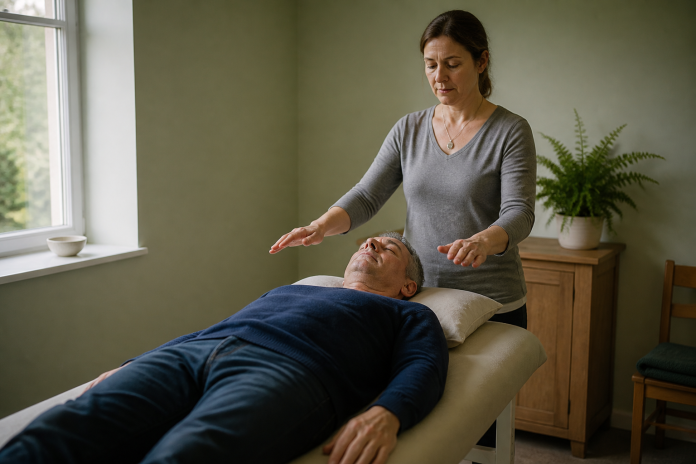
Person resting fully clothed on a treatment table in a bright practitioner room while a Reiki practitioner holds her hands just above the shoulders

Quick Guide

The benefits people most often report from Reiki are feeling calmer, sleeping better on the night of a session, and enjoying a quiet, attentive hour. Those experiences are real and worth having. What research does not show is that Reiki treats pain, asthma, depression, migraine or any other condition. This guide separates the two, explains why the difference matters, and gives you a fair way to decide whether Reiki is worth it for you.

Search for “Reiki benefits” and you will find lists that run from stress relief to curing arthritis. Some of those claims describe what people feel; others are medical promises that no study supports. If you are deciding whether to book a session or learn the practice, you deserve a list that tells you which is which.

The benefits people commonly report

Ask people who have had a Reiki session what they got from it, and the answers cluster around a small number of experiences. These are consistent across surveys and practitioner reports, and there is nothing mysterious about them.

What a session usually delivers

  • Deep relaxationLying still for 45 minutes with light touch and no phone is rare in most people’s week. Many describe it as the most relaxed they have felt in months.
  • A calmer mood afterwardsPeople often say they feel lighter or less irritable for the rest of the day, similar to the after-effect of a massage or a long walk.
  • Easier sleep that nightReports of falling asleep faster are common. A slow evening session and a quiet ride home probably contribute.
  • Being listened toA practitioner who asks how you are and then gives you undivided attention is, for many people, the most valuable part.

These are experiences, not measured outcomes. They can matter a great deal without proving anything about energy or illness.

Two further benefits are worth naming because they are less obvious. First, a regular session can become a fixed point in the week that stops you from running on empty, in the way a class or a walk with a friend might. Second, for people learning self-Reiki, the daily routine of sitting still with light hands is a habit that some find easier to keep than formal meditation. Self-Reiki practice covers how to set that up.

What research can and cannot confirm

The U.S. National Center for Complementary and Integrative Health summarises the evidence bluntly: Reiki has not been clearly shown to be useful for any health-related purpose, and there is no scientific evidence that the energy field it describes exists. Studies that exist are mostly small, short and hard to blind, because the person receiving Reiki can usually tell whether the practitioner is trained or simply going through the motions.

That does not mean the relaxation people report is imaginary. It means researchers cannot separate a Reiki-specific effect from the effects of resting, being attended to, and expecting to feel better. When a trial compares Reiki with “sham Reiki” delivered by an untrained person, the two groups often report similar improvements. That is a useful finding: it suggests the setting and the attention are doing much of the work.

For a longer explanation of how to read Reiki studies, including what comparison groups and effect sizes mean, see what research says about Reiki.

Claims to be careful with

The old version of this article said Reiki could “get rid of asthma, menopausal symptoms, headaches, migraines, arthritis and more” and that it made the body “stronger than conventional medicine does”. Neither statement is supported, and the second is potentially dangerous. Here is how common claims hold up.

Claim Status A fair way to say it
“Reduces stress” Commonly reported, not proven as a treatment “Most people feel calmer during and after a session.”
“Improves sleep” Commonly reported for the night of a session “Many people sleep well after an evening session.”
“Relieves chronic pain” Mixed, small studies; cannot separate from rest and attention “Some people feel more comfortable afterwards; it is not a pain treatment.”
“Treats asthma, arthritis, migraine” No supporting evidence Do not make this claim.
“Helps depression or anxiety disorders” Not a treatment; may be a pleasant addition for some “Can sit alongside therapy or medication, never instead of it.”
“Balances chakras or clears blocks” A description within the tradition, not a measurable effect “Practitioners describe it this way; it has not been detected.”
“Safe in pregnancy and alongside treatment” Generally low-risk as a relaxation practice “Tell your care team; avoid pressure and skip painful or treated areas.”

Advertising regulators take the same line. The U.S. Federal Trade Commission’s health-claims guidance expects objective health claims to be backed by competent scientific evidence. “I found it relaxing” needs no evidence; “it cures migraines” does, and none exists.

Why the distinction protects you

It is tempting to think the wording does not matter as long as people feel better. It matters for three reasons. Someone who believes Reiki treats asthma may skip an inhaler. Someone who is told their pain is an “energy block” may delay a scan that would have found a treatable cause. And someone who pays for twelve sessions to “clear” a condition will feel cheated when it does not clear, even though the sessions themselves may have been pleasant. Honest expectations keep the good part of Reiki intact and keep medical care where it belongs. The Reiki safety guide lists the red flags to watch for in a practitioner.

Who tends to find Reiki worthwhile

  • People who struggle to switch off and want a structured hour of rest with another person present.
  • People who find touch comforting, or who prefer hands-off contact and want that respected.
  • People going through a hard stretch who want something gentle alongside proper care.
  • People drawn to the ritual and spiritual side, for whom the meaning is the point.

Who may be disappointed

  • Anyone expecting a symptom to change because of the session.
  • People who dislike lying still or being touched by a stranger.
  • Anyone who was told Reiki would replace a treatment, medication or appointment.
  • People on a tight budget who would get the same rest from a nap, a bath or a walk.

A fair way to judge it for yourself

  1. Set a plain expectation. “I want an hour of rest and to see whether I feel calmer afterwards.” Nothing about symptoms.
  2. Book two or three sessions, not a package. Enough to get past first-visit nerves, not enough to sink money into.
  3. Write one line after each session. How you felt that evening and the next morning. Keep it honest and short.
  4. Compare with a free alternative. On another week, spend the same hour resting at home and write the same line.
  5. Decide on that record. If Reiki gives you something the free hour did not, it is worth its price to you. If not, you have lost little.

What sessions and training cost

Prices vary widely by country and city. A session typically costs about as much as a massage of the same length in the same area, and a Level 1 course is usually a one- or two-day event. Ask what is included, whether the practitioner is insured, and what the cancellation terms are. Be wary of anyone who ties price to a promised outcome or who says you must buy a block of sessions before you notice any benefit. If you would rather try a practitioner or reader online first, our comparison of Reiki and psychic services lists what to check on each platform; a listing verifies terms, not abilities.

Key Takeaways

  • The real benefits are relaxation, a calmer mood, easier sleep that night and being attended to.
  • Research cannot separate a Reiki-specific effect from rest, attention and expectation.
  • Claims about treating asthma, arthritis, migraine, depression or pain are unsupported and should not be made.
  • Keep medical care in place; Reiki sits beside it, never instead of it.
  • Judge it by your own short, honest record against a free alternative.

Related reading

Frequently Asked Questions

1. What are the main benefits of Reiki?

The benefits people most often report are deep relaxation during the session, a calmer mood afterwards, easier sleep that night, and the experience of being listened to. These are experiences rather than proven health effects.

2. Is Reiki scientifically proven?

No. The NCCIH summary finds no clear evidence that Reiki is useful for any health purpose, and no evidence for the energy field it describes.

3. Can Reiki reduce stress?

Most people feel calmer during and after a session. Studies cannot tell whether that comes from Reiki itself or from resting quietly with someone’s full attention.

4. Does Reiki help you sleep?

Many people report sleeping well on the night of a session, especially an evening one. There is no evidence it treats insomnia.

5. Can Reiki relieve pain?

Some people feel more comfortable afterwards. Research is small and mixed and cannot separate a Reiki effect from rest and expectation. It is not a pain treatment.

6. Does Reiki treat asthma, arthritis or migraine?

No. There is no evidence for these claims, and relying on Reiki instead of treatment for such conditions is unsafe.

7. Can Reiki help with depression or anxiety?

Some people find sessions calming, but neither condition should be managed with Reiki alone. Keep therapy and medication in place and discuss any complementary practice with your clinician.

8. What is sham Reiki and why does it matter?

Sham Reiki is a comparison in studies where an untrained person mimics a session. When both groups report similar benefits, it suggests attention and rest explain much of the effect.

9. Is Reiki safe?

As a light-touch relaxation practice it is generally low-risk. The main risks are delaying medical care or having pressure applied to an injured or treated area.

10. Can I have Reiki during pregnancy?

Light, hands-off or gentle sessions are generally considered low-risk, but tell your midwife or doctor and avoid pressure on the abdomen.

11. How many sessions do I need to feel a benefit?

If a session is going to relax you, you will usually know after one or two. Be wary of advice that benefits only appear after buying a large package.

12. Does Reiki balance chakras or clear energy blocks?

That is how the tradition describes it. The energy and the blocks have not been detected scientifically, so treat it as language within the practice, not a measurable result.

13. Is self-Reiki as beneficial as a session with a practitioner?

For relaxation, a daily self-practice can be just as useful and costs nothing. What you lose is the other person’s attention, which some people value most.

14. Can Reiki replace medical treatment?

No. It should never replace diagnosis, medication, therapy or urgent care. It can sit alongside them as a comfort practice.

15. How do I tell whether Reiki is worth it for me?

Set a plain expectation, try two or three sessions, keep a one-line note after each, and compare with an hour of rest at home. Decide on that record.

Final thoughts

Reiki’s real benefits are modest, pleasant and worth describing accurately: an hour of rest, a calmer evening, sometimes a better night’s sleep, and the attention of someone whose only job for that hour is you. Those things do not need a cure claim attached to be valuable. Keep your expectations plain, keep your medical care where it is, and let your own short record decide whether Reiki earns a place in your week.

Evidence statements checked against the NCCIH Reiki overview on 26 September 2026.

Toxic Relationships: The Signs, the Line Between Toxic and Abusive, and How to Step Back

Woman on a park bench looking at her phone with a calm, resolved expression, one thumb hovering over the screen, autumn afternoon

Quick Guide

A toxic relationship is one that reliably leaves you worse off: smaller, more anxious, more doubtful of yourself, and unable to say why you stay. The signs are consistent across friendships, family, partners and work: blame that always lands on you, contempt dressed as jokes, support that never arrives, a running tally of what you owe, and a feeling of walking on eggshells. This guide gives those signs, draws the line between toxic and abusive, which is a line with a phone number on the far side of it, and sets out how to step back with the least damage. It also corrects the old version’s most harmful idea: that anyone who questions your changes is toxic. Sometimes the person questioning you is the one who loves you.

The earlier article was written from inside a particular story: you are changing and growing, and the people around you, “loved ones”, “comfortable people” and “tweeters”, are resisting because your change frightens them. There is some truth in it; people do resist change in those close to them. But the frame turns every doubt into sabotage and every worried relative into an enemy, and that is the frame that isolates people from the friends who might have helped them. What follows starts from behaviour instead.

The signs, by behaviour

What they do What it looks like What it does to you
Shift blame Nothing is ever their fault; every conflict ends with you apologising You stop trusting your own account of events
Contempt as humour Put-downs in front of others, “just joking” when you object You laugh along and feel smaller each time
Keep score Every favour is a debt; help comes with a reminder of what you owe You feel you can never be even
Absent when it counts Enthusiastic in good times, unreachable in bad ones You learn not to ask
Punish with silence or mood Withdrawal, sulking, cold spells you have to work to end You manage their feelings before your own
Undermine your other relationships Doubts planted about friends, family, colleagues Your circle shrinks and they become central
Never quite dishonest, never quite straight Promises that evaporate, versions of events that shift You cannot plan around them

One of these, occasionally, is a person having a bad month. Several of them, over months, forming a pattern you can predict, is a toxic relationship. The test the old article got right is the simplest one: after time with this person, do you feel more yourself or less?

Toxic is not the same as abusive

The line. A toxic relationship wears you down. An abusive one controls or endangers you. If a person monitors your phone or movements, controls your money, isolates you from others, threatens you, damages your things, hurts you physically, or pressures you sexually, that is abuse, and the response is different: safety first, and help from people trained in it. In the United States, the National Domestic Violence Hotline is available at any hour on 1-800-799-7233 or by texting START to 88788; other countries have equivalent services. You do not need to be certain it counts as abuse to call. The advice below is for toxic relationships; it is not enough for abusive ones.

When the person questioning you is not toxic

The old article listed, as toxic, loved ones who “get scared” when you change, friends who “don’t want to lose you”, and mentors who feel hurt when you change direction. Those are descriptions of people who care about you and are handling it imperfectly. A parent who worries that your new plan will leave you broke is not sabotaging you; a friend who says “are you sure?” about a relationship is doing their job. The difference between concern and toxicity is in how they treat your answer. Concern hears you out, says its piece once, and supports you anyway. Toxicity returns to the subject, punishes you for the choice, and makes you pay for it. Before you cut someone off for questioning you, ask which one they did. Many people who have adopted a new practice, a new belief or a new teacher have been taught to hear every question as an attack, and it is a lesson that serves the teacher rather than the student. Karmic relationships covers the version of this that happens with partners.

Stepping back, with the least damage

  1. Write down the pattern. Five specific incidents, with dates, from the table above. Not feelings; events. This is what you will re-read when you doubt yourself, which you will.
  2. Say it once, plainly, if it is safe to. “When you do X, I feel Y, and I need it to stop.” One sentence. Some people, told plainly, change. If nothing changes after one clear statement, you have your answer and you do not need to repeat it.
  3. Reduce, before you cut. Most toxic relationships do not need a dramatic ending; they need less. Fewer calls, shorter visits, no more lending, no more 2 a.m. rescues. Many fade on their own once you stop feeding them.
  4. Hold three rules regardless of mood. Pick the three that matter with this person, no money, no discussing your other friends, no answering after ten at night, and keep them when guilt argues. How to protect your aura gives the general version.
  5. Cut, if reducing fails. For some relationships, the only workable distance is none. If you get there, say it once, briefly, in writing if that is easier, and do not explain more than a sentence. Explanations are invitations to negotiate.
  6. Expect the pull. Guilt, nostalgia, a charming message after three weeks of silence. Re-read the list from step one. The pull is the relationship’s last move, not evidence you were wrong.
  7. Refill the space. The old article said not to worry about being left alone. Do worry, a little, and act on it: one existing friendship given more time, one new setting a week. Toxic relationships shrink circles; rebuilding the circle is the real ending.

Family, work and the relationships you cannot leave

Some toxic people are a parent, a sibling, a boss or a co-parent, and cutting them off is not available or not right. The tools are the same, scaled: reduce contact to what the role requires, keep the three rules, meet on your ground or in public, bring a third person to hard conversations, and keep your own account of events in writing. With a toxic boss, the account is also your protection. With a toxic parent, a therapist who works with families is worth more than any amount of advice, because the patterns are decades old and you are inside them.

When it might be you

A fair question, and the old article never asked it. If every relationship in your life ends with the other person being toxic, the common factor deserves a look. Signs worth examining: you keep score too; you punish with silence; you tell each new friend how the last one betrayed you; you cannot recall a conflict where you were partly wrong. None of that makes you a bad person; it makes you someone repeating a pattern, and patterns are changeable. Non-attachment covers the difference between holding people lightly and keeping them at arm’s length, and a therapist can help with the rest.

Key Takeaways

  • A toxic relationship reliably leaves you smaller, more anxious and less sure of yourself; judge by behaviour patterns over months.
  • Toxic wears you down; abusive controls or endangers you, and needs safety and trained help first.
  • People who question your choices are not toxic if they hear you out and support you anyway; the frame that treats every doubt as sabotage isolates people.
  • Write the pattern down, say it once, reduce before you cut, hold three rules, expect the pull, refill the space.
  • If every relationship ends the same way, look at the common factor, kindly and with help.

Related reading

Frequently Asked Questions

1. What is a toxic relationship?

One that reliably leaves you smaller, more anxious and less sure of yourself, through patterns like blame-shifting, contempt, score-keeping, absence when it counts and punishment by mood.

2. What is the simplest test?

After time with this person, do you feel more yourself or less? Over months, the answer is reliable.

3. What is the difference between toxic and abusive?

Toxic wears you down. Abusive controls or endangers you: monitoring, isolating, controlling money, threats, damage, physical or sexual harm. Abuse needs safety and trained help first.

4. Where do I get help if it is abuse?

In the U.S., the National Domestic Violence Hotline at 1-800-799-7233 or text START to 88788, at any hour. Other countries have equivalents. You need not be certain to call.

5. Is someone toxic if they question my choices?

Not if they hear you out, say their piece once and support you anyway. They are toxic if they return to it, punish you, and make you pay for the choice.

6. Why did the old article treat worried relatives as toxic?

It was written from inside a story where change is always growth and doubt is always resistance. That frame isolates people from the friends who might help them.

7. Should I confront a toxic person?

If it is safe, say it once, plainly: “when you do X, I feel Y, I need it to stop.” If nothing changes after one clear statement, you do not need to repeat it.

8. Do I have to cut them off?

Usually not. Reduce first: fewer calls, shorter visits, no lending, no rescues. Many toxic relationships fade once you stop feeding them.

9. How do I end it if reducing fails?

Say it once, briefly, in writing if easier, with no more than a sentence of explanation. Explanations invite negotiation.

10. What if they come back charming after weeks of silence?

That is the relationship’s last move. Re-read your written list of incidents; the pull is not evidence you were wrong.

11. What about a toxic parent or boss I cannot leave?

Reduce contact to what the role requires, keep three rules, meet on your ground, bring a third person to hard conversations, and keep a written record. A family therapist helps with parents.

12. Will I end up alone?

Toxic relationships shrink your circle, so rebuilding it is part of the ending: one existing friendship given more time, one new setting a week.

13. What if every relationship I have ends this way?

Look at the common factor, kindly. Keeping score, punishing with silence and never being partly wrong are patterns, and patterns can change with help.

14. Can Reiki or energy work fix a toxic relationship?

No. A quiet practice can steady you while you act. The acting is the fix.

15. Is it unloving to step back from someone?

No. The old article was right about this: you can love someone and still refuse to be worn down by them. Distance is a boundary, not a verdict.

Final thoughts

The old article ended with a line worth keeping: love them but leave them, and do not give your power to people who do not care for you. The version here adds two things. Check first that the person is toxic rather than worried, because the friends who question you are often the ones worth having. And if the relationship controls or frightens you, the word is not toxic, the advice on this page is not enough, and the phone number is in the box above.

Helpline details checked on 26 September 2026.

Reiki Psychic Surgery: What It Claims, Why It Is Not Reiki, and What to Do If Offered It

Woman reading a printed leaflet at a clinic reception desk while a receptionist points to a page, waiting-room chairs behind them

Quick Guide

“Reiki psychic surgery” is a practice in which a practitioner claims to locate “energy blocks” in a client’s body and remove them by miming surgical actions, often invoking an archangel and Reiki symbols. It is not part of Usui Reiki, it has no basis in evidence, and it is aimed squarely at people with physical illnesses who have run out of gentler options. Its name borrows from “psychic surgery”, a documented fraud. This page replaces an older set of instructions for performing it. If you are ill and someone has offered you this, the short advice is: do not pay for it, do not let it delay treatment, and tell your care team what was proposed.

The page that used to sit at this address explained how to “scan the aura” for blocks in a client’s organs, “cut, stitch or drill, metaphorically” to remove them, and seal the result with symbols. It described the practice as reserved for physical ailments “that have not responded to gentler forms of healing”. In other words, it was written for the sickest, most desperate clients a practitioner will ever meet. That is exactly why it needed replacing rather than tidying.

What the practice claims

Practitioners who offer Reiki psychic surgery describe it as advanced energy work, usually restricted to Reiki masters, for stubborn blocks that ordinary sessions have not shifted. A session typically involves preparing a room with symbols and incense, invoking Archangel Raphael as the “chief surgeon”, scanning the client’s energy field by hand, identifying blocks near affected organs, removing them with visualised tools such as a “violet flame”, miming surgical repair over the body, and closing with a full Reiki session and a “cocoon” of light. Clients are told that disease has an underlying energetic cause and that the blocks will return until it is healed.

Every step of that is a claim about the client’s body, and none of it can be observed, measured or tested. The NCCIH overview of Reiki finds no evidence for the energy field Reiki describes and no clear health benefit from Reiki at all; “psychic surgery” adds a further layer of claims on top of an unsupported foundation.

Where the name comes from

“Psychic surgery” originally refers to a practice that emerged in the Philippines and Brazil in the mid-twentieth century, in which healers appeared to open a patient’s body with their bare hands, remove diseased tissue and close the wound without a mark. Investigators, including professional magicians, showed the “tissue” to be animal parts and the “blood” to come from concealed containers. The U.S. Federal Trade Commission called it a “total hoax” in the 1970s, and the American Cancer Society’s review found no evidence of benefit for any medical condition and strongly urged ill people not to seek it. Patients who did, including the comedian Andy Kaufman, sometimes died of cancers that had gone untreated.

The Reiki version does not involve fake blood; the “surgery” is mimed in the air. But it inherits the name, the framing (removing something bad from inside a sick body), and the target audience. A practitioner who chooses that name for a service is, at best, careless about what it signals.

Why it is not Reiki

Usui Reiki as taught “Reiki psychic surgery”
Practitioner is a passive channel; energy “goes where it is needed” Practitioner diagnoses blocks and actively removes them
No diagnosis, no claims about specific organs Scans the aura for blocks near affected organs
Still, light hands; nothing is done to the client Mimed cutting, stitching and drilling over the body
No deities or intermediaries required Archangel Raphael as “chief surgeon”
Explicitly not a treatment Offered for physical ailments that have not responded elsewhere
Taught in standard Level 1 to 3 curricula A later add-on with no place in Usui’s system

Serious Reiki teachers of every lineage will tell you the same: Reiki does not diagnose, does not treat, and does not “remove” anything from anyone. Understanding Reiki and how Reiki works describe what the practice actually is.

Why it is harmful

  • It targets the seriously ill. By its own description it is for conditions that have not improved with gentler methods. Those are the people with the most to lose from delay.
  • It diagnoses. Telling a client where their “blocks” are, near which organ, is a diagnostic claim by someone with no training to make one.
  • It explains disease as energetic. “There is an underlying cause to disease; until it is healed the blocks will return” tells a cancer patient that their illness is about energy. It is not.
  • It sets up repeat sales. Blocks that “return” need more sessions. Angel-card readings to find the “root cause” are offered as follow-up.
  • It exhausts the client. The old instructions warned that it “can cause negative symptoms” and that client and practitioner must rest between blocks. A frightened, ill person being told they are undergoing surgery is under real stress.
  • It borrows a fraud’s name. Whether or not the practitioner intends it, the association with a hoax that killed people is not one to trade on.

If you are ill and this was offered to you

  1. Do not pay for it. Nothing it claims to do can happen. If you have already paid, ask for a refund and keep the correspondence.
  2. Do not let it delay anything. No scan, appointment, treatment or medication should be moved to accommodate it.
  3. Tell your care team what was proposed. They will not judge you for looking; they will want to know if someone is steering you away from treatment.
  4. If you want Reiki, book the ordinary kind. A calm, light-touch session with a practitioner who says plainly that it is not treatment can be a comfort during illness. Reiki and your health explains how to fit that alongside care.
  5. If you feel pressured, walk away. Urgency, fear and “nothing else will work” are sales techniques, not care.

If you are a practitioner

You may have been taught this by someone you respect, and you may have seen clients feel better afterwards. Clients feel better after attention, rest and drama; they also feel better after the natural ups and downs of an illness. Neither is evidence that anything was removed. The honest position is to stop offering it, to describe Reiki as what it is, and to refer ill clients firmly back to their clinicians. The Reiki safety guide sets out the boundaries that protect both your clients and you, including the legal exposure that comes with implied treatment claims.

On archangels and symbols. Invoking Raphael, drawing Dai Ko Myo and Cho Ku Rei, placing “balls of Reiki” in the corners of a room: these are devotional and ritual acts that may be meaningful to the practitioner. They are not procedures with effects on a client’s body, and describing them as “sealing the healing” or “filling the areas worked on” is what turns a ritual into a false medical claim.

Key Takeaways

  • Reiki psychic surgery is a diagnostic-and-removal practice with no basis, aimed at people with physical illness.
  • It is not part of Usui Reiki, which neither diagnoses nor treats.
  • Its name comes from a documented fraud that kept seriously ill people from care.
  • If offered it: do not pay, do not delay treatment, tell your care team.
  • Ordinary Reiki, described honestly, can still be a comfort alongside proper care.

Related reading

Frequently Asked Questions

1. What is Reiki psychic surgery?

A practice in which a practitioner claims to find energy blocks in a client’s body and remove them with mimed surgical actions, symbols and archangelic help. It has no basis in evidence and is not part of Usui Reiki.

2. Is it the same as psychic surgery in the Philippines or Brazil?

Not the same procedure; there is no fake blood. It borrows the name, the framing of removing something from a sick body, and the target audience of seriously ill people.

3. Was psychic surgery ever shown to work?

No. The American Cancer Society found no evidence of benefit for any condition and urged ill people not to seek it. Investigators showed the procedures to be sleight of hand.

4. Can a Reiki practitioner remove energy blocks?

No. The energy and the blocks have not been detected by any measurement, and Reiki as taught does not involve diagnosing or removing anything.

5. Is it dangerous?

The mimed actions are harmless. The danger is that it is offered to ill people as treatment, explains disease as energetic, and can delay real care.

6. Why do people feel better afterwards?

Attention, rest, ritual and expectation all change how people feel, and illnesses have natural ups and downs. None of that shows anything was removed.

7. Is this taught in Reiki courses?

Not in standard Usui curricula. Some teachers add it as an advanced technique; serious lineages reject it.

8. What should I do if a practitioner offers it to me?

Decline, do not pay, do not delay any appointment, and mention it to your care team.

9. Can Reiki help me if I am seriously ill?

Ordinary Reiki can be a calm hour alongside treatment, offered honestly as comfort. It cannot treat anything, and no version of it can remove disease.

10. What does the archangel invocation mean?

It is a devotional act that may be meaningful to the practitioner. It has no effect on a client’s body, and describing it as guiding a surgery is a false claim.

11. Are the Reiki symbols used in psychic surgery the real ones?

Dai Ko Myo and Cho Ku Rei are standard Usui symbols. Using them in this context does not make the practice Reiki or give it any effect.

12. Is offering this illegal?

Laws vary, but implying that a service treats disease without evidence breaches consumer and advertising rules in many countries. Practitioners take on real legal exposure.

13. I am a practitioner who was taught this. What now?

Stop offering it, describe Reiki honestly, and refer ill clients back to their clinicians. Your clients’ safety and your own standing both improve.

14. Do blocks come back after the session?

There are no blocks. The claim that they return is what turns one sale into a series.

15. Where can I report a practitioner who offered this as treatment?

To your national consumer-protection or advertising-standards body, and, if they are a member, to their professional association.

Final thoughts

Reiki psychic surgery takes the gentlest of practices and points it at the most vulnerable clients with the boldest of claims. There is nothing in it for the client except cost, false hope and the risk of delay, and nothing in it for the practitioner except a reputation they will not want. If you are ill, keep your care where it is and, if you want a calm hour alongside it, book the ordinary kind of Reiki from someone who tells you plainly what it cannot do.

Health statements reviewed on 26 September 2026. If you are seriously ill and considering any alternative practice, talk to your care team first.

Chakra Out of Balance: What the Phrase Means, in Brief

Chakra Out of Balance

Short answer

“A chakra out of balance” is the chakra map’s way of saying that one area of life feels off: safety, pleasure, confidence, connection, expression, clarity or meaning. Used that way, the phrase is a useful prompt for reflection. Used as an explanation for a physical symptom, it is not, because chakras are a meditation map rather than anatomy, and the old version of this page was wrong to say Reiki “addresses the physical problems” that imbalance causes. Symptoms need a clinician; the map helps you notice what is going on in your life.

Read the full guide

What people mean when they say a chakra is blocked, the feelings each of the seven is traditionally linked to, how to use the system as a reflection tool, and the physical and emotional signs that need a clinician instead.

Signs Your Chakras Are Blocked: A Reflective Guide, Not a Diagnosis

Using “out of balance” honestly

  • Ask the seven theme questions once a week; the one with the most uncomfortable answer is the “imbalance”. Chakra work with Reiki gives a twenty-minute practice built around them.
  • Treat any physical symptom, pain, digestive trouble, fatigue, as a matter for your doctor first, however neatly it maps onto a chakra.
  • If what is off is mood, and it has lasted weeks, that is a matter for a doctor or therapist rather than more sessions. The Reiki safety guide explains where the line sits.

Distance Reiki Sessions: What You Are Actually Buying, What to Pay, and What to Avoid

Woman lying on a daybed in a sunroom with a laptop open on a stool beside her showing a video call, headphones on

Quick Guide

A distance Reiki session is one where the practitioner is not in the room. Some are held over a video call, some by phone, and some with no live contact at all: you lie down at an agreed time while the practitioner “sends” Reiki from wherever they are. There is no mechanism by which any of this can act on your body and no evidence that it does. What a live online session can still offer is a scheduled period of guided rest with someone’s attention on you. This guide explains the three formats, what each is worth, what to pay, and the claims that should make you close the booking page.

The earlier version of this article argued that distance Reiki works like wi-fi or radio, that “distance does not limit energies”, and that a remote session “will probably become your favourite healing method”. None of that holds up, and it matters, because distance sessions are the part of the Reiki market where the gap between price and substance is widest. Here is what you are actually buying.

The three formats, and what each contains

Format What happens What you actually receive
Live video session You lie down at home on a call; the practitioner talks you through settling, then sits quietly “sending” while you rest, and checks in at the end Scheduled rest, a guided wind-down, and a person’s attention for 30 to 45 minutes. This is a real service.
Live phone or audio session As above, without video The same, with slightly less sense of presence
Unattended “sending” You are given a time; the practitioner sends Reiki from their location; you may or may not lie down; a written summary follows Nothing that reaches you. Any benefit comes from you choosing to rest at the agreed time.

The distinction matters for what you should pay and what you should expect. A live session supplies three of the four ingredients that make in-person Reiki relaxing: rest, attention and expectation, as how Reiki works explains. Only touch is missing. An unattended session supplies none of them unless you supply the rest yourself, in which case you have paid for a calendar reminder.

Why distance cannot add anything

The NCCIH overview of Reiki finds no evidence that the energy described in Reiki exists and no clear health benefit from Reiki of any kind. In-person Reiki still produces relaxation because rest, touch and attention are genuinely present. Remove the room and the touch, and what remains is whatever the format still delivers. The wi-fi comparison does not rescue this. Wi-fi is a measurable electromagnetic signal with a transmitter, a receiver and a known frequency; every one of those can be tested. Reiki’s energy has no transmitter, no receiver, no frequency and no measurement. Analogies borrow the credibility of a real technology without any of its evidence. If you would like the fuller picture of the tradition’s distance practice, including the Level 2 symbol and how practitioners understand it, understanding long-distance Reiki covers it.

What a good live session looks like

  1. A short conversation. How you are, what you want from the half hour, anything that makes lying still difficult. The practitioner should say plainly that this is relaxation, not treatment.
  2. Setting up your space. You lie down or sit somewhere quiet, phone on silent, camera positioned so they can see you are settled, or audio only if you prefer.
  3. A guided settle. A few minutes of slow breathing and attention to the body, spoken by the practitioner. This is the part that does the work.
  4. Quiet time. The practitioner goes silent for 20 to 30 minutes while you rest. Whether they are “sending” or simply sitting still makes no difference to what you receive.
  5. Closing. They bring you back with their voice, ask how you feel, and remind you to drink water and take it easy.

Judged as guided rest, that is a decent service and a fair thing to pay for, especially if you cannot travel, are unwell, or find a stranger’s touch difficult. Judged as energy transfer, it is nothing, and pricing it as if it were is the problem.

When a distance session makes sense

  • You are housebound, immunosuppressed, or too unwell to travel, and want a scheduled rest with company.
  • You live somewhere with no practitioners and want to try the practice before committing to a course.
  • You find in-person sessions stressful because of travel, cost or the intimacy of touch.
  • You already have a practitioner you trust and want an occasional session between visits.

When it does not

  • You are buying it to treat a condition, pain, or a mood problem. It cannot, and neither can the in-person version.
  • The session is unattended. You are paying for a time slot, not a service.
  • It is being sold for a pet, a child, or another adult who has not asked for it. Nothing reaches them.
  • The practitioner claims to sense what is wrong with you, or to send healing to a past or future event.
  • You are in crisis. A remote practitioner cannot help you; a crisis line can.

What to pay

A live video session should cost less than an in-person one of the same length, because the practitioner has no room, no table, no laundry and no travel. Half to two-thirds of their in-person rate is reasonable. An unattended session should cost very little or nothing; some practitioners offer them free to existing clients, which is the honest price. Be wary of packages, of “distance healing programmes” sold in blocks, and of any suggestion that a series is needed before you notice a benefit. If you are comparing online options, our comparison of Reiki and psychic services lists what to check on each platform; a listing verifies prices and terms, not anyone’s abilities.

About the “written record”. Some practitioners send a summary after an unattended session describing what they “felt” in your energy or which areas needed work. Read these as creative writing. They are not observations of you, they often contain the same phrases for every client, and they are sometimes used to sell the next session. A summary of a live session that records what you said and how you felt is a different, useful thing.

Doing it yourself instead

Everything a live distance session provides, except the practitioner’s voice and attention, you can arrange for free. Set an alarm for a quiet half hour, lie down with your hands resting on your chest and abdomen, breathe slowly, and stay there until the alarm. How to do Reiki gives the routine. Add a recorded relaxation track if you want a voice. For many people this is enough, and the money saved buys an in-person session when you want one.

Key Takeaways

  • Distance Reiki cannot act on your body; no energy, transmitter or measurement exists.
  • A live video or phone session still provides rest, attention and a guided wind-down, and is a fair service at a reduced price.
  • An unattended “sending” delivers nothing to you; pay little or nothing for it.
  • The wi-fi and radio comparison borrows credibility without evidence.
  • Never buy a distance session as treatment, for someone else, or in a crisis.

Related reading

Frequently Asked Questions

1. Does distance Reiki work?

Not as energy transfer; there is no mechanism and no evidence. A live video or phone session can still provide guided rest and attention, which is where any benefit comes from.

2. What is the difference between a live session and unattended sending?

In a live session the practitioner is on a call with you, guiding you to settle and checking in. In unattended sending they act alone at an agreed time and nothing reaches you.

3. How long is a distance Reiki session?

Usually 30 to 45 minutes for a live session, including conversation. Unattended sessions are whatever the practitioner says they are.

4. How much should distance Reiki cost?

A live session should cost about half to two-thirds of the practitioner’s in-person rate. An unattended session should cost little or nothing.

5. Is distance Reiki as good as in person?

It keeps rest, attention and expectation and loses touch and the calm of a dedicated room. For some people it is enough; for most, in person is the better experience.

6. Can distance Reiki work like wi-fi or radio?

No. Those are measurable signals with transmitters, receivers and frequencies. Reiki’s energy has none of these, and the comparison borrows credibility without evidence.

7. What do I need for a live session?

A quiet place to lie or sit, a phone or laptop on a call, and half an hour undisturbed. Headphones help. Video is optional.

8. Can I have distance Reiki sent to a pet or a family member?

Nothing reaches them. Sitting calmly with a pet, or asking a family member whether they want a session, does something; paying for sending does not.

9. What is a written session summary?

After an unattended session, some practitioners describe what they felt in your energy. Treat it as creative writing, not observation, and notice if it is used to sell the next session.

10. Can distance Reiki treat an illness or pain?

No. Neither distance nor in-person Reiki treats any condition. Keep medical care in place.

11. Is distance Reiki useful if I cannot leave the house?

A live session can be a scheduled rest with company, which is genuinely useful for people who are housebound or unwell. Price it as that.

12. Do I need to do anything during an unattended session?

If you lie down and rest at the agreed time, you will get the benefit of resting. That benefit came from you, not from the sending.

13. What should a practitioner never claim about a distance session?

That they can sense what is wrong with you, send healing to a past or future event, treat a condition, or reach someone who has not asked for it.

14. Can I do the same thing myself for free?

Largely, yes: set a time, lie down with light hands on your chest and abdomen, breathe slowly, and rest until an alarm. A recorded relaxation track replaces the voice.

15. Is distance Reiki officially recognised?

Some occupational standards describe distance practice as one form of Reiki. That describes what practitioners do; it is not evidence that it does anything.

Final thoughts

A distance Reiki session is worth exactly what it contains. A live call with a calm practitioner who guides you into half an hour of rest is a modest, real service and should be priced like one. An unattended sending is a time slot. Nothing in either format crosses the distance to act on your body, and no comparison to wi-fi changes that. Book the live version if it suits your life, pay accordingly, and keep everything that needs treating with the people who can treat it.

Evidence statements checked against the NCCIH Reiki overview on 26 September 2026.