

Quick Guide
“Chakra work with Reiki” means using the seven-point chakra map to structure a self-Reiki session: hands rest at each point in turn, from the base of the spine to the crown, with slow breathing and a short reflection at each. This optional rest-and-reflection routine may feel pleasant, but it is not a demonstrated way to strengthen energy, clear blockages or prevent illness. The seven-point map is a symbolic framework, not a medical assessment. You can shorten, adapt or skip any part.
Do not use a chakra interpretation to explain symptoms, blame someone for illness or promise faster results from a wish box. A reflective practice can coexist with spiritual beliefs without presenting those beliefs as a diagnosis or guarantee. Keep ordinary medical care and your own boundaries in place.
What chakra work with Reiki actually is
Reiki self-practice already moves the hands through a series of positions from head to feet. The chakra version simply uses the seven points of the chakra map as the positions and adds a theme to reflect on at each. Within the tradition, the practitioner is said to channel Reiki into each centre to balance it. As a non-medical exercise, it can be approached as a structured body scan: attention moves through the body, with optional hand contact and reflection themes. Sensations and comfort vary; they do not establish an energy mechanism. How Reiki works discusses the practice, proposed explanations and limits of the evidence.
The practice, step by step
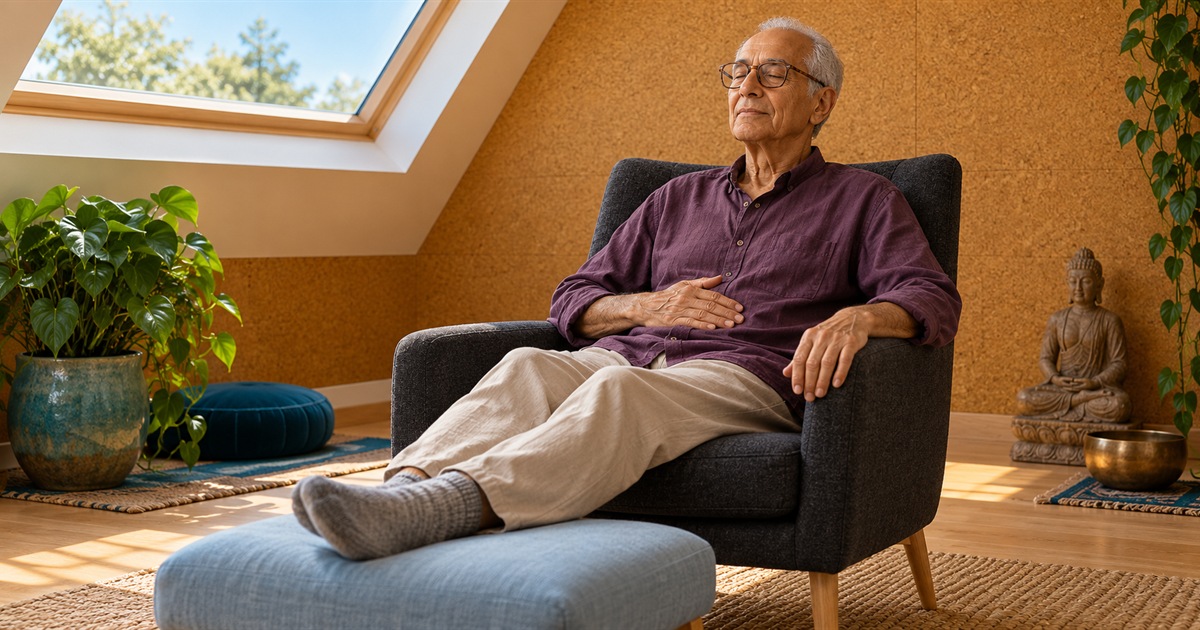
- Lie down or sit. Choose whichever position is comfortable; a cushion under the knees or a supportive chair may help. Do not stay in a painful position.
- Settle for two minutes. Breathe normally and comfortably without holding or forcing the breath. If attention to breathing is uncomfortable, notice the room or your feet instead. If you like a starting gesture, rest the palms together at the chest for a few breaths.
- Root: hands resting on the thighs, or no touch. Two to three minutes. Reflection: do I feel safe and settled at the moment?
- Sacral: hands on the lower abdomen. Reflection: is there anything I am enjoying, making or looking forward to?
- Solar plexus: hands on the upper abdomen. Reflection: do I feel capable of what is in front of me?
- Heart: hands on the centre of the chest. Reflection: who am I connected to, and is anything grieving?
- Throat theme: rest the hands on the upper chest or thighs, not pressing the throat. Reflection: is there something I am not saying?
- Brow theme: hands lightly at the forehead, or on the thighs; do not press the eyes. Reflection: am I thinking clearly, or going round in circles?
- Crown: hands resting on the top of the head. Reflection: does anything feel meaningful this week?
- Close. Rest the hands comfortably, look around and rise gradually when ready. Stop sooner if you feel dizzy, distressed or uncomfortable. Write down anything that stayed with you.
Treat twenty minutes as a rough option, not a target: about two minutes at each point plus settling and closing is shorter than spending three minutes at all seven. A brief session is also fine. Colours (red, orange, yellow, green, blue, indigo, violet) can be visualised at each point if you find that pleasant; they may serve as attention cues, not evidence of physical energy centres. The full chakra map, its history and its stone pairings are in the 7 chakras and healing crystals.
What it does, and what it does not
| Possible experience | What it does not establish |
|---|---|
| A period of rest with comfortable breathing; responses vary | A demonstrated way to strengthen or energise a chakra field |
| Seven optional reflection questions | That illness is caused by chakra blockages or can be treated by clearing them |
| An opportunity to notice tension or feelings | Protection from negativity absorbed from people and places |
| Some people feel relaxed; others do not | Manifesting goals faster by channelling energy into a wish box |
| Possible sensations of warmth or heaviness under the hands | Evidence that energy is flowing through the centres |
The NCCIH overview of Reiki finds no evidence for the energy described and no clear health benefit; that applies to chakra-structured sessions as much as any other. The left-hand column describes possibilities, not guaranteed outcomes.
On “mental illness from blocked chakras”. Mental health conditions should not be attributed to chakra blockages. Such an explanation is not established by evidence and can discourage appropriate assessment or care. If a practice like this brings up persistent low mood, anxiety or anything frightening, the right next step is a doctor or therapist. Reiki and depression sets out the boundary in more detail.
Additions people find helpful
- A stone under the hand. Any smooth stone gives the fingers something to hold. It is an attention object, not a treatment, and it should never go in drinking water.
- Quiet sound. Rain, a singing-bowl recording, or nothing. Choose whatever helps you stay put for twenty minutes.
- A one-line intention. “Rest” or “notice” is better than a goal. Personal mantras for Reiki sessions explains how to choose one that helps rather than promises.
- A weekly note. After each session, write which of the seven questions had the most honest answer. Over a month, that note tells you more than any amount of energy talk.
Additions to skip
- The wish box. Writing goals down is useful; “channelling energy” into a box to manifest them faster is not. Can Reiki attract money and love? covers why.
- Asking guides for messages. A quiet mind produces images and thoughts; treating them as instructions from elsewhere is a good way to make poor decisions feel authorised.
- Waiting for a “Grand Master” to unlock the practice. This optional body scan needs no paid attunement. Adapt or skip positions according to comfort; formal Reiki training is a separate choice.
Key Takeaways
- Chakra work with Reiki is a hands-on body scan using the seven-point map, with a reflection at each point.
- It offers optional rest and reflection, not a demonstrated way to strengthen or clear energy.
- Sickness and mental illness are not caused by blocked chakras, and the claim can delay real help.
- Stones, sound and a one-line intention are fine additions; wish boxes and messages from guides are not.
- No paid attunement is needed for this optional body scan. Formal Reiki training is a separate choice.
Related reading
- The 7 chakras and healing crystals: a beginner’s guide
- Signs your chakras are blocked: a reflective guide, not a diagnosis
- How to do Reiki: self-practice, training and limits
- Self-Reiki practice: a comfortable routine and clear limits
- Gassho and joshin kokyu ho, step by step
Frequently Asked Questions
1. What is chakra work with Reiki?
A body scan organised around a seven-point chakra map, with optional hand positions and reflection questions. The map is a symbolic framework, not a medical assessment.
2. Does Reiki make chakra energy stronger?
There is no scientific evidence supporting the energy field proposed in Reiki or a demonstrated way to strengthen it. Relaxation or warmth is not proof of energy flow.
3. How long should a session take?
Twenty minutes is an optional rough duration, not a requirement. About two minutes at each point plus settling and closing is shorter than three minutes at all seven. Stop or shorten it as needed.
4. Do I need Reiki training to do this?
No formal training or paid attunement is needed for this optional body scan. Formal Reiki training is a separate choice and does not establish medical effectiveness.
5. Can blocked chakras cause sickness or mental illness?
There is no established evidence that chakra blockages cause these conditions. Do not use that explanation instead of appropriate assessment or care.
6. Should I visualise the chakra colours?
You may use red through violet as optional attention cues if that feels comfortable. Colours are not evidence of physical energy centres.
7. Which order should I go in?
This guide uses root to crown as a convenient sequence. You may adapt the order or skip positions; there is no medically required order.
8. Can I use crystals during the practice?
A smooth stone can be an optional attention object. It is not a medical treatment; keep it out of drinking water and stop if holding it is uncomfortable.
9. What is a Reiki wish box?
A box used in some practices for written goals and Reiki intentions. Writing down a goal can support reflection, but the box is not a demonstrated way to guarantee or accelerate an outcome.
10. Should I ask guides for messages during meditation?
Treat any images or thoughts as personal experiences, not verified instructions from an outside source. Do not base high-stakes decisions on them alone.
11. Can I chant or play music?
Quiet music or a personally meaningful phrase is optional. Silence is equally acceptable; choose what is comfortable without expecting a guaranteed effect.
12. What if a reflection brings up something heavy?
Stop, look around and return to something grounding. You do not have to process difficult feelings alone; speak with someone you trust or a qualified professional if distress persists.
13. Is lying down better than sitting?
Neither is universally better. Choose a comfortable supported position and change it if it hurts. A chair is an option if lying flat is difficult.
14. How often should I do it?
There is no established therapeutic schedule for this exercise. Try it only when you want to, and stop if it is unhelpful or uncomfortable.
15. Does this replace therapy or medical care?
No. It is an optional rest and reflection practice, not a diagnosis or treatment. Discuss persistent or concerning symptoms with a qualified clinician.
Final thoughts
Keep only the parts of this body scan that feel comfortable and useful. A symbolic map may structure reflection, but sensations do not diagnose illness, prove energy flow or guarantee a result. Your comfort, consent and ordinary care matter more than completing all seven positions.
The use of crystals in Reiki meditation as described here is something I haven’t encountered before. It might be beneficial to include more information on how to select and use different crystals.
The concept of using Reiki to maintain chakra health is fascinating. However, I wonder about the scientific basis for these practices.
While scientific research on Reiki is limited, many people report subjective benefits. It’s worth exploring further to understand its potential.
It’s intriguing to see how ancient practices like Reiki are being integrated into modern wellness routines. The explanation of the chakras and their energy flow was particularly enlightening.
The article’s suggestion of combining music and mantras during Reiki meditation could be very helpful for those looking to deepen their practice. Specific recommendations on tracks or chants would be a nice addition.
Reiki meditation as described seems to offer a holistic approach to wellness. Although it’s couched in spiritual terms, the underlying principle of stress reduction and energy balancing could be quite effective.
The article provides a comprehensive overview of how Reiki and meditation can harmonize to balance the chakras. It offers practical steps for beginners and advanced practitioners alike.