

Quick Guide
If you are new to Reiki, you have three sensible first steps: read enough to know what it is and is not, try a quiet self-practice at home for a couple of weeks, and only then decide whether a Level 1 course is worth the money. This guide covers all three, plus how to choose a teacher, what the first month of practice looks like, and the small set of expectations that keep Reiki honest and safe.
Beginners’ guides to Reiki tend to start with visualisations of white light and instructions for “channelling” energy into other people. That puts the cart before the horse. Before you send anything anywhere, it helps to know what Reiki actually involves, what it can reasonably offer, and whether you enjoy the simple act at the centre of it: sitting still with light hands.
Step one: know what you are getting into
Reiki is a Japanese relaxation practice from the 1920s. A practitioner rests their hands lightly on or just above a person’s body; the tradition describes this as channelling a universal life energy. Research has not found that energy and has not shown Reiki to treat any condition, but people reliably report feeling calm and rested. If that sounds like something you would value, Reiki may suit you. If you are hoping to fix a health problem, it will not, and it is better to know that now. Understanding Reiki covers the history and principles; Reiki benefits separates what people report from what is proven.
Step two: try it at home first
You do not need a course, an attunement or any equipment to try the core of Reiki. Set aside ten minutes, sit or lie comfortably, rest your palms lightly over your eyes, then your chest, then your abdomen, staying a few minutes in each place and breathing normally. Do this daily for two weeks and write one line afterwards about how you feel. How to do Reiki gives the full sequence and a 20-minute routine.
Two weeks is long enough to learn something useful. Some people find the routine settling and look forward to it; others find it dull and would rather walk or stretch. Neither is wrong, but only the first group should spend money on a course.
Step three: decide about a Level 1 course
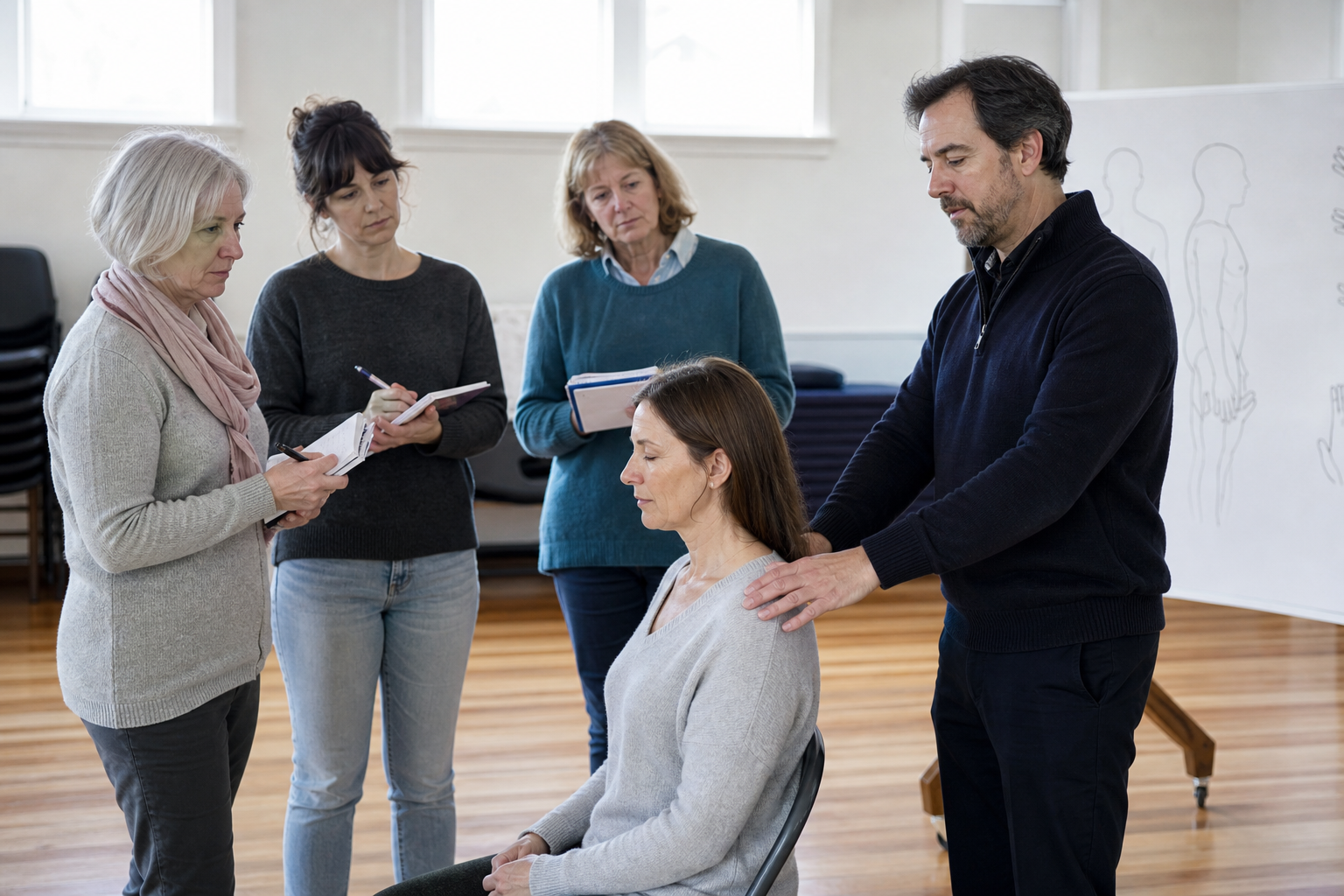
Level 1, sometimes called Shoden, is the traditional entry point. It is usually a one- or two-day event, in person or occasionally online, and it typically covers:
- The history of Reiki and the five precepts.
- The standard hand positions for self-practice and for treating others.
- An attunement, the short ceremony in which the teacher initiates you into the lineage.
- Practice time, usually giving and receiving short sessions with other students.
- Guidance on consent, boundaries and what not to claim.
That last item is where courses differ most. A good teacher spends real time on it. A poor one skips it and fills the gap with promises. If you are considering a course, preparing for a Reiki attunement describes what the ceremony involves.
How to choose a teacher
Reiki has no licensing body in most countries, so anyone can teach. The practical safeguards are the questions you ask and the answers you get.
Good signs
Names their lineage and teacher. Small class, plenty of hands-on practice. Talks about consent and touch boundaries unprompted. Describes Reiki as a relaxation practice and tells you to keep seeing your doctor. Has insurance. Clear price, clear refund terms, no pressure to book Level 2 on the day.
Warning signs
Promises Reiki will treat or cure conditions. Large online groups with no practice time. Certificates issued after watching videos with no attunement or feedback. “Master in a weekend” packages. Pressure to buy all three levels up front. Vague or shifting answers about what the fee includes.
Your first month after Level 1
Most teachers ask new students to practise self-Reiki daily for at least three weeks after the course. This is sensible whether or not you believe anything about energy: it builds the habit while the instruction is fresh. A simple month looks like this.
- Week 1: self-practice only. Ten to twenty minutes daily, using the positions you were taught. Note one line each day.
- Week 2: add the precepts. Read the five precepts at the start of each session. Notice which one you keep coming back to.
- Week 3: one session for a willing friend or family member. Run the full consent conversation first, keep the touch light, ask afterwards how it felt. Do not interpret anything for them.
- Week 4: review your notes. Is the daily routine something you want to keep? Did giving a session feel comfortable? Decide from the record, not from how the course made you feel on the day.
Giving your first session to someone else
Practising on another person is where beginners most often get it wrong, usually with good intentions. Keep to a few rules. Ask about hands-on or hands-off contact and about any area to avoid. Explain that this is a relaxation practice, not a treatment. Check in partway through. Keep your observations neutral afterwards; “how did that feel?” is a good question, “I felt a block in your solar plexus” is not. Do not practise on injured, painful or recently operated areas, and never suggest that a session could replace an appointment or a medication. The Reiki safety guide covers these boundaries in detail.
About visualisations. Many courses teach beginners to imagine white light flowing from the crown through the heart and out of the hands, and to “seal” a session with a gesture. These can be pleasant ways to focus attention and mark the start and end of a practice. Treat them as that. They do not move anything into or out of anyone, and describing them to a recipient as something that happened to their body crosses into claims you cannot support.
What Level 2 and beyond add
Level 2 introduces the traditional symbols, including the one used for distance practice, and is the level most lineages expect before you treat the public or charge fees. The master or teacher level trains you to give attunements and teach. There is no hurry. Many people stay at Level 1 for years and get everything they wanted from Reiki there. Understanding long-distance Reiki explains what the distance practice is and is not, if you are curious about Level 2.
Expectations that keep it honest
- Do not expect sensations. Warmth or tingling may come; nothing at all is equally normal.
- Do not expect symptoms to change. If they do, something else was probably happening at the same time.
- Do not use Reiki to delay a check-up, stop a medication or manage a mental-health condition on your own.
- Do not tell recipients what their body “needs” or what you “felt” in them.
- Do not buy more training than you have used. Practise Level 1 for months before considering Level 2.
Key Takeaways
- Try two weeks of self-practice before paying for a course; it tells you whether you like the practice.
- Level 1 is usually one or two days and should include hand positions, an attunement, practice time and clear guidance on claims.
- Choose a teacher by their answers on consent, insurance, price and what Reiki cannot do.
- Practise daily for a month after the course and decide from your notes.
- Keep medical care in place and keep your language about Reiki modest.
Related reading
- How to do Reiki: self-practice, training and limits
- What happens in a Reiki session: step by step
- Japanese Reiki techniques: gassho and joshin kokyu ho
- Self-Reiki practice: a comfortable routine and clear limits
- What does research say about Reiki?
Frequently Asked Questions
1. Do I need training to start Reiki?
Not for self-practice. The hand positions are simple and low-risk. A Level 1 course adds the tradition’s structure, an attunement and a teacher to ask.
2. What is Reiki Level 1?
The first stage of training, usually one or two days, covering history, hand positions, an attunement, practice time and guidance on consent and claims.
3. How much does a Level 1 course cost?
Prices vary widely by country and teacher. Ask what the fee includes, how large the class is, and what the refund terms are before paying.
4. Can I learn Reiki online?
Some teachers offer Level 1 online. Look for live practice time and feedback; a certificate issued after watching videos alone is not the same thing.
5. What is an attunement?
A short ceremony in which the teacher initiates you into the lineage. Within the tradition it opens you to Reiki; practically it marks that you have been taught.
6. How do I choose a Reiki teacher?
Ask about lineage, class size, insurance, price and refund terms, and listen to how they describe what Reiki can and cannot do. Avoid anyone who promises cures.
7. What should I feel when practising?
Some people notice warmth or tingling; many feel nothing beyond relaxation. No sensation is required or means anything about energy.
8. How often should a beginner practise?
Ten to twenty minutes daily for the first few weeks builds the habit. Consistency matters more than length.
9. When can I give Reiki to other people?
Level 1 traditionally covers family and friends. Always run a consent conversation first and keep your language modest. Most lineages expect Level 2 before you treat the public.
10. Can Reiki help with sleep or stress?
Many people find a quiet session calming and sleep well afterwards. That is a common experience, not a proven treatment for insomnia or an anxiety disorder.
11. Are the white-light visualisations necessary?
No. They are a way to focus attention and mark the start and end of a session. They do not move energy into or out of anyone.
12. Is Reiki safe for beginners to practise?
Yes, as a light-touch relaxation practice. The risks are using it in place of medical care or practising on injured or painful areas.
13. How long before I move to Level 2?
There is no rule. Practising Level 1 for several months first is sensible, and many people never need Level 2.
14. Do I have to be spiritual or religious?
No. Reiki has no required beliefs, and the five precepts read as everyday ethical guidance.
15. What is the most common beginner mistake?
Telling a recipient what you “felt” in their body or what it “needs”. Keep observations to how they felt, and keep medical questions with clinicians.
Final thoughts
Starting Reiki well is mostly a matter of order: understand it, try it, then decide whether to train. Two weeks of quiet self-practice costs nothing and tells you more than any course description. If you go on to Level 1, choose the teacher by their honesty as much as their lineage, practise daily for a month, and keep your expectations plain. Reiki at its best is a calm habit and a gentle way to sit with other people, and it does not need to be anything more.
Evidence statements checked against the NCCIH Reiki overview on 26 September 2026.
It’s interesting that the practice emphasizes self-preparation and mindfulness before helping others. This might ensure that the practitioner is also in a good state, which could enhance the overall effectiveness of the session.
The emphasis on visualizing energy and light is fascinating. However, I wonder if there are scientific studies that support the claims made about Reiki’s effectiveness.
The step-by-step instructions for different Reiki sessions are well-explained and accessible. The discussion about energy flow aligns with many ancient healing practices.
The article provides a concise and clear outline of Reiki practices. It is interesting to see how the therapy combines both mental and physical elements, creating a holistic approach to healing.
The explanation of ‘sealing the energy’ is intriguing. The ritualistic aspect of it might provide a sense of closure and completeness to the healing session.
The description of Reiki for sleep and stress relief seems practical and potentially beneficial. It would be helpful to know more about how individuals have integrated these practices into their daily routines.