
Home Blog Page 9

Hon Sha Ze Sho Nen: The Reiki Distance Symbol, What It Means and Where the Claims Stop

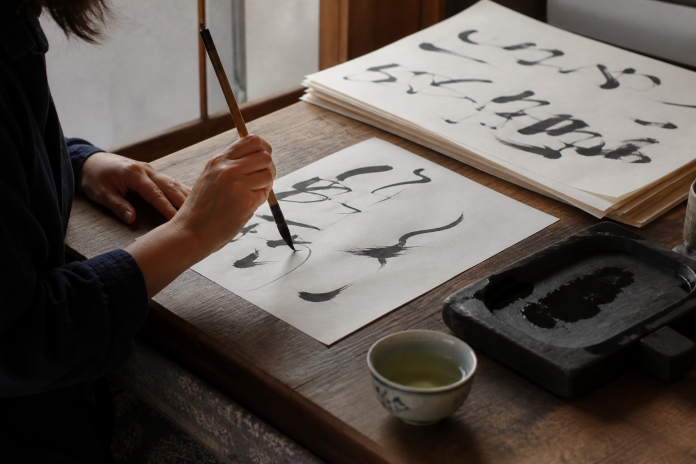
Close-up of a person practising calligraphy with a brush on paper at a low table, ink stone and a cup of tea beside them

Quick Guide

Hon Sha Ze Sho Nen is the third of the four traditional Usui Reiki symbols, taught at Level 2 and used for distance practice. Its name is usually rendered as “no past, no present, no future” and it is drawn as a tall stack of stylised Japanese characters. Within the tradition it is the focus a practitioner uses when offering Reiki to someone not present. Outside it, the symbol is a meditation aid with no effect on anyone else, and claims that it opens “Akashic records”, heals past lives, or can be set to “repeat automatically” have no basis. This guide explains what the symbol is, what it means to practitioners, how it is used, and where the claims stop.

The old version of this page said the distance symbol gives “access to the Akashic Records”, works on the receiver’s “subtle body”, can be sent “to the future” or “to the past”, and can be set up “to automatically repeat”. It also said the recipient “is likely to feel it happening”. None of that is supportable. What the symbol actually is, and how thoughtful practitioners use it, is more interesting than the mythology and takes less explaining.

What the symbol is

Hon Sha Ze Sho Nen is a composite of Japanese kanji stacked and simplified into a single vertical form. The characters, read individually, carry meanings along the lines of origin or root, person, correct or true, thought or mind, and the whole is conventionally glossed as “no past, no present, no future” or, more loosely, “the origin of all is pure consciousness”. The old article’s claim that the symbol represents the five Chinese elements and the chakras is a later interpretation, not part of the form. Because it is the longest of the four symbols and passed hand to hand for a century, it has more drawing variations than any other, which is why one lineage’s version can look quite different from another’s.

Some lineages ask students not to publish the symbols and treat them as sacred; others regard them as freely available. This site does not reproduce them, out of respect for the first view, and because the form of the symbol has no bearing on what the practice does.

What it means to practitioners

Within Reiki, energy is not thought of as travelling from one place to another; it is described as universal and already everywhere. The distance symbol is therefore not a transmitter. It is the practitioner’s way of setting aside the idea of separation, “no past, no present, no future”, so that offering Reiki to someone in another city is felt to be no different from offering it to someone on the table. The phrase sometimes attached to it, “the Buddha in me greets the Buddha in you”, captures the same idea: a statement of connection, not a mechanism. Understanding long-distance Reiki covers the practice as a whole.

How it is used

  1. The practitioner sits quietly at an agreed time, often with a photograph, a written name or simply the person in mind.
  2. The symbol is drawn in the air, on the palm, or visualised, sometimes with the other Level 2 symbols before and after it, and its name is said silently three times.
  3. Hands are held as for a session, over a cushion, a knee, or a stand-in object, for fifteen to thirty minutes.
  4. The session is closed as any other, and the practitioner may send a message afterwards.

Methods vary between teachers; the old article was right that ten masters in a room would each do it differently. That is because the steps are a framework for the practitioner’s attention, and attention does not need a fixed procedure.

Where the claims stop

Claim Status
The symbol lets Reiki reach someone far away The tradition’s belief. There is no mechanism and no evidence that anything reaches anyone; the NCCIH finds no support for the energy at all.
The recipient will feel it happening Only if they know the time and choose to rest then, in which case they feel the rest. Blinded tests do not show recipients detecting when Reiki is being sent.
It gives access to the Akashic records A Theosophical idea from the late nineteenth century, not part of Usui’s teaching, and not something anyone has demonstrated.
It heals past lives, parallel lives, or trauma from this life No. Trauma is processed with a trained therapist; past lives are a belief, not a treatment target.
It can be sent to the future to help with a task A ritual of good wishes for a coming event. Harmless if understood that way; nothing acts on the future.
It can be set to repeat automatically Nothing is being sent, so nothing can be scheduled. A practitioner who charges for “ongoing sending” is charging for nothing.
It works on the subtle body, chakras and aura None of these has been detected. The phrase explains why no physical effect is seen by moving the claim somewhere it cannot be checked.

A respectful way to hold the symbol

None of this means a practitioner should stop using Hon Sha Ze Sho Nen. As a focus for goodwill towards someone who has asked for it, at a time they know about, it is a coherent and often comforting practice for both parties. The honest version keeps three things straight: it is done only for people who asked; it is described as intention rather than treatment; and it is never sold as if something were delivered. Distance Reiki sessions sets out what a live online session is worth compared with unattended sending, and the Reiki safety guide covers the claims to avoid.

For victims of disasters. Old articles often suggest sending Reiki to people affected by a calamity. If that helps you feel less helpless, there is no harm in it, but it does nothing for them. Money to a reputable relief organisation does.

Key Takeaways

  • Hon Sha Ze Sho Nen is the Level 2 distance symbol, a stack of stylised kanji glossed as “no past, no present, no future”.
  • Within the tradition it expresses connection rather than transmission; outside it, it is a meditation aid with no effect on others.
  • Akashic records, past-life healing, sending to the future and automatic repeats have no basis.
  • Recipients feel rest if they rest; they do not detect sending.
  • Use it, if at all, for people who asked, as intention, never as a paid delivery.

Related reading

Frequently Asked Questions

1. What is Hon Sha Ze Sho Nen?

The third traditional Usui Reiki symbol, taught at Level 2, used as the focus for distance practice. It is a vertical stack of stylised Japanese characters.

2. What does the distance symbol mean?

It is usually glossed as “no past, no present, no future”. Practitioners understand it as a statement of connection rather than a mechanism.

3. How is it pronounced?

Roughly “hon-sha-zay-show-nen”. Pronunciation varies slightly between lineages.

4. Why does the symbol look different in different lineages?

It is the longest of the four symbols and was passed hand to hand for a century, so drawing variations accumulated. The differences do not matter to what it does.

5. Does the symbol send Reiki across distance?

That is the tradition’s belief. There is no mechanism and no evidence that anything reaches anyone.

6. Will the person feel Reiki being sent?

Only if they know the time and choose to rest then. Blinded tests do not show recipients detecting when Reiki is being sent.

7. Does it open the Akashic records?

No. That is a late-nineteenth-century Theosophical idea, not part of Usui’s teaching, and nobody has demonstrated it.

8. Can it heal past lives or trauma?

No. Trauma is processed with a trained therapist. Past lives are a belief, not something a symbol acts on.

9. Can Reiki be sent to the future or the past?

Practitioners sometimes do this as a ritual of good wishes or reflection. Nothing acts on past or future events.

10. Can distance Reiki be set to repeat automatically?

No. Nothing is being sent, so nothing can be scheduled. Paying for ongoing sending is paying for nothing.

11. Does the symbol represent the five elements and the chakras?

That is a later interpretation, not part of the symbol’s form or Usui’s teaching.

12. Are the Reiki symbols secret?

Some lineages keep them confidential; others publish them. This site does not reproduce them, and the form has no bearing on what the practice does.

13. Do I need permission to use the symbol for someone?

Most lineages say yes, and it is the right rule: send only for people who asked, and keep it private otherwise.

14. Is there any value in the practice?

As focused goodwill towards someone who asked, at a time they know about, it can be comforting for both parties. Described as intention rather than treatment, it is coherent.

15. Should I send Reiki to disaster victims?

If it eases your own helplessness, there is no harm. It does nothing for them; a donation to a reputable relief organisation does.

Final thoughts

Hon Sha Ze Sho Nen is a beautiful idea expressed in a stack of borrowed characters: that separation is not the whole story and that goodwill does not need proximity. Held as that, it is a fine thing for a practitioner to draw. Sold as a way to reach the Akashic records, heal past lives or deliver energy on a schedule, it becomes a claim that cannot be kept. The symbol has never needed the second story, and the people who receive its goodwill deserve the first.

Evidence statements checked against the NCCIH Reiki overview on 26 September 2026.

Chakras and “Frequency Vibrations”: Why the Radio Comparison Fails, in Brief

Short answer

Chakras do not have frequencies or vibrations in any measurable sense, and there are not “114 chakras” tuned like a radio. Those ideas borrow the vocabulary of physics to make a meditation map sound like a technology. Different Indian traditions have described systems with anywhere from four to dozens of centres, and the seven-chakra version most people know took its rainbow colours from twentieth-century Western writers. The map remains useful as a set of themes to reflect on; the frequency language adds nothing and should be dropped. This page used to promote it, and now points to the accurate guide instead.

Read the full guide

The chakra system’s real history, a reference table of the seven points and their traditional themes, what crystals can and cannot do, and an honest practice.

The 7 Chakras and Healing Crystals: A Beginner’s Guide Without the Overclaims

Why the radio comparison fails

  • A radio receives a measurable electromagnetic signal on a known frequency. No instrument has detected anything of the kind at a chakra point.
  • “Raising your vibration” describes a mood, not a physical change. Feeling lighter after rest is real; a change in frequency is a metaphor.
  • The same borrowed-vocabulary problem runs through Reiki’s energy explanations; how Reiki works sets out what is actually happening instead.

Do You Have to Believe in Reiki? What Belief Changes, and What It Doesn’t

Man sitting on the edge of a treatment table with arms loosely folded, talking with a practitioner who stands beside him holding a clipboard, in a small bright therapy room

Quick Guide

You do not have to believe in Reiki for a session to be restful. Rest, light touch and attention work on sceptics; belief adds a little through expectation, and that is all it adds. The reverse is also true: believing strongly does not make Reiki treat anything, because research has found no effect on illness regardless of what anyone believes. This guide looks at what belief actually changes, what the American Cancer Society, the NCCIH and the U.S. Catholic bishops have said, why the placebo effect is not “nothing”, and how a sceptic can give Reiki a fair one-session trial.

“Do you believe in Reiki?” is usually asked as if the answer settled whether it works. It does not. Belief is one of four ordinary ingredients in a session, and the smallest. The more useful questions are what belief changes, what it does not, and how to find out for yourself without being sold anything.

What belief changes

Expectation is a real effect. People who expect a treatment to help report more benefit than people who expect nothing, across medicine, sport and almost every human activity; it is why trials have placebo arms. In Reiki, a person who arrives expecting to feel calmer usually does feel a little calmer than a person who arrives expecting nothing. That is belief’s whole contribution: a modest boost to the experience of relaxation. It does not change whether the session is restful, because lying still in a warm room with someone’s hands resting on you is restful whether or not you think anything is flowing. How Reiki works sets belief alongside the other three ingredients, rest, touch and attention.

What belief does not change

If you believe strongly If you are sceptical Either way
You will probably rate the session as more relaxing You will probably rate it as somewhat relaxing Your heart rate and breathing will slow because you rested
You may report warmth, tingling or emotion You may report the same, or nothing Neither report indicates energy transfer
You may feel the practitioner “found something” You will notice they placed their hands in a fixed sequence Nothing was found; the sequence is the same for everyone
You may hope it treats a condition You will not expect it to It does not, in either case

The last row is the one that matters. The NCCIH reports no clear evidence that Reiki is useful for any health-related purpose and no evidence for the energy it describes. The American Cancer Society’s position has long been that available evidence does not support claims that Reiki treats cancer or any other illness. Those findings come from studies that included believers; belief did not produce an effect on disease, because there is no effect to produce.

The placebo effect is not nothing

The old version of this page concluded that Reiki’s benefits are “the placebo effect” plus confirmation bias plus attention, as if that settled the matter against it. It settles a narrower point. The placebo effect, expecting to feel better and therefore feeling better, is a real change in how a person feels, and feeling calmer is exactly what Reiki offers. What placebo effects do not do is alter the course of an illness, and that is why a practice built on them can comfort but cannot treat. Knowing this lets you take the comfort without the false hope. It also explains why sham-Reiki studies, in which untrained actors perform the hand positions, produce the same relaxation as trained practitioners: the ingredients are identical. What does research say about Reiki? goes through those studies.

The religious objection

Belief cuts the other way too. In 2009 the Committee on Doctrine of the United States Conference of Catholic Bishops issued guidelines concluding that Reiki is compatible with neither Christian teaching nor scientific evidence, and that it would be inappropriate for Catholic institutions to promote or support it. Their reasoning was that Reiki’s “universal energy” is presented as neither a natural force open to science nor divine power available through faith, and that Catholics should not put trust in it. Whatever a reader thinks of the conclusion, the reasoning is coherent, and a religious reader who shares it should not be talked out of it by “it’s only relaxation”. Reiki vs faith healing compares the two practices for readers weighing that question.

Why hospital use is not an argument

The old article reasoned that a practice would not have “found its way into modern-era hospitals” unless there was something to it. There is something to it, a calm hour, and that is exactly why hospitals offer it: as optional supportive care for comfort, delivered by volunteers, framed carefully as not treatment. Hospitals also offer pet therapy, art classes and hand massage on the same basis. Presence on a ward reflects patient demand and low risk, not evidence of effect on illness. Reiki and your health explains how patients can use that framing themselves.

A fair trial for a sceptic

  1. Book one session, ideally in the evening, with a practitioner who describes Reiki as relaxation and offers hands-off contact if you prefer it.
  2. Say you are sceptical. A good practitioner will be unbothered; a defensive one has told you something useful.
  3. Do not try to feel anything. Lie there, breathe, let your mind wander. Feeling nothing is a normal result, not a failure of openness.
  4. Judge it that evening. Did you sleep well? Did the hour feel like rest? Those are the only outcomes on offer.
  5. Compare it with a free alternative. A week later, lie down at home for forty-five minutes with your hands on your chest and abdomen. If that gave you most of the same benefit, you have learned what you were paying for. How to do Reiki gives the routine.

On “you have to be open to it”. Some practitioners say Reiki only works for people who are open. It is half true, since expectation adds a little, and it is a poor excuse, because rest and touch work on everyone. If a session left you cold and the practitioner blames your scepticism, the session did nothing, and that is information about the session.

Key Takeaways

  • Belief adds a modest boost to how relaxing a session feels; rest, touch and attention do the rest, for sceptics too.
  • Belief does not make Reiki treat anything; studies with believers found no effect on illness.
  • The placebo effect is a real change in feeling, which is why Reiki comforts and why it cannot cure.
  • Hospital use reflects demand and low risk, not evidence of effect.
  • A sceptic can judge Reiki in one evening session, compared with a free lie-down at home.

Related reading

Frequently Asked Questions

1. Do you have to believe in Reiki for it to work?

No. Rest, light touch and attention relax sceptics too. Belief adds a modest boost through expectation and nothing more.

2. Does believing make Reiki more effective against illness?

No. Studies including believers found no effect on any illness. Belief changes how relaxing the session feels, not what it does.

3. Is Reiki just the placebo effect?

Largely, together with rest, touch and attention. The placebo effect is a real change in feeling, which is why Reiki comforts and why it cannot treat.

4. What does the American Cancer Society say about Reiki?

That available evidence does not support claims that Reiki treats cancer or any other illness, and that further study may clarify effects on wellbeing.

5. What does the NCCIH say?

That Reiki has not been clearly shown to be useful for any health-related purpose and that there is no scientific evidence for the energy it describes.

6. Why do Catholic bishops object to Reiki?

Their 2009 guidance found Reiki compatible with neither Christian teaching nor scientific evidence, and advised Catholic institutions not to support it.

7. Does hospital use prove Reiki works?

No. Hospitals offer it as optional supportive care for comfort, like pet therapy or hand massage, because patients want it and it is low-risk.

8. Will I feel anything if I am sceptical?

You may feel warmth, heaviness or drowsiness from lying still, or nothing at all. Both are normal and neither indicates energy.

9. What if the practitioner says I was not open enough?

That is an excuse. Rest and touch work on everyone. A session that did nothing did nothing, and that is information about the session.

10. How can a sceptic test Reiki fairly?

One evening session judged by how you slept and whether the hour felt like rest, compared a week later with a free forty-five-minute lie-down at home.

11. Why do sham-Reiki studies matter?

Untrained actors performing the hand positions produce the same relaxation as trained practitioners, which shows the ingredients are rest, touch, attention and expectation.

12. Should I tell the practitioner I am sceptical?

Yes. A good practitioner will be unbothered and may adjust the language. A defensive reaction tells you something useful.

13. Is it dishonest to enjoy Reiki without believing in it?

No. Enjoying a calm hour of rest requires no belief, and many practitioners hold the energy language lightly themselves.

14. Can belief be harmful?

Only when it leads someone to use Reiki instead of treatment. Belief in the comfort is harmless; belief in a cure is the risk.

15. What is the honest answer to “do you believe in Reiki?”

That it reliably provides rest and comfort, that its energy has never been detected, and that it treats nothing. All three can be true at once.

Final thoughts

Belief in Reiki is a small dial that turns a restful hour into a slightly more restful one. It is not a switch that turns comfort into treatment, and no amount of it will. So the honest answer to “do you believe in Reiki?” is that the question is less important than it sounds: believe or not, you will get rest; believe or not, you will not get a cure. Take the first, decline the second, and let the practitioner’s language wash over you either way.

Evidence statements checked against the NCCIH Reiki overview on 26 September 2026.

Is Reiki “Channelled Energy”? Three Descriptions, and What Attention Actually Does

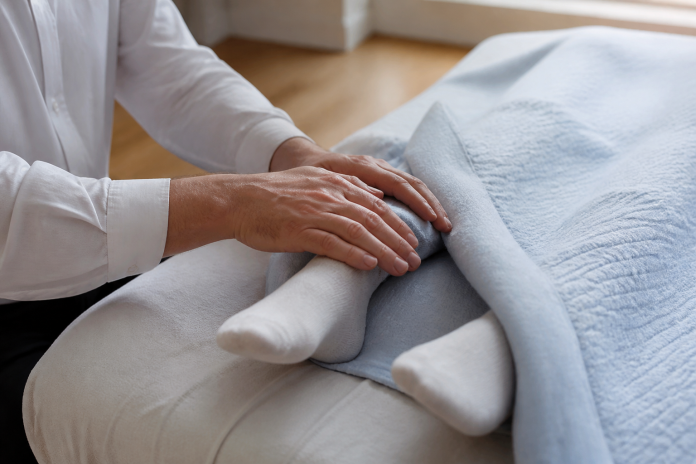
Close-up of a practitioner's hands resting lightly over a person's socked feet at the end of a treatment table, blanket and daylight

Quick Guide

Reiki is often called “channelled energy”, but the word channel is doing a lot of work. Practitioners describe what they do in at least three different ways: bringing energy down from above and out through the hands; accessing something already present within the recipient; or, more plainly, moving attention from place to place. Only the third describes anything that can be observed, and it happens to fit the evidence. This article sets out the three descriptions, explains why Reiki is not “channelling” in the mediumship sense, and shows why the attention model is the most useful one for practitioners and clients alike.

The earlier version of this page was a personal essay by a practitioner who had come to doubt the “bringing Reiki down from above” model he was taught, and who proposed instead that Reiki is a “dimension” or “level of consciousness” that precedes electromagnetism in “the sequence of creation”. The cosmology does not hold up. But the essay contained one observation worth keeping, that what feels like energy moving through the body is really attention moving, and that observation is the whole of this rewrite.

Reiki is not channelling in the mediumship sense

When a psychic or medium talks about channelling, they mean receiving messages from a specific entity, a spirit, an angel, a departed person, and passing them on. Reiki makes no such claim. Nobody is speaking through the practitioner, no information is received, and nothing is relayed. The word “channel” in Reiki refers to the practitioner being a conduit for a diffuse, impersonal energy, not a voice for anyone. The two uses share a word and nothing else, and a Reiki practitioner who starts “receiving messages” during a session has stepped outside Reiki into something the practice does not endorse. Does Reiki enhance psychic abilities? covers why such impressions arise and why they are not information.

Three ways practitioners describe what they do

Description What it says Can it be checked?
Bringing energy down Universal energy enters at the crown, flows to the heart and out through the palms into the recipient No. No energy has been detected entering, flowing or leaving. Sensations of movement are real but are the practitioner’s own.
Activating what is already there Reiki is a dimension present within everything; the practitioner’s consciousness activates it in the recipient rather than sending anything No. It relocates the claim to somewhere unobservable, which is why it cannot be tested and also why it cannot support any health claim.
Moving attention The practitioner’s attention rests in one place, then another; the recipient’s attention follows the hands; both slow down Yes. Attention, breathing, heart rate and reported sensations can all be observed, and this is what studies actually find.

The first two descriptions are the tradition’s language and its philosophical refinement. The third is what a sceptical observer would see, and it is fully compatible with what practitioners and recipients report. The NCCIH finds no evidence for the energy in the first two; it does not dispute that people feel calmer, which the third explains without remainder.

What attention actually does on the table

  1. The practitioner settles. Slow breathing and a soft focus produce the state Reiki calls “opening” and meditation teachers call presence. Heart rate drops.
  2. Hands rest. Warm, still contact draws the recipient’s attention to that part of the body. Muscles there often release, which the recipient feels as warmth or heaviness and the practitioner feels through the hands.
  3. Attention moves. When the hands move to the next position, both people’s attention follows. The recipient may feel “energy moving”; what has moved is where they are paying attention, exactly as the old essay noticed.
  4. Time passes quietly. Forty-five minutes of this is a long rest with slowed breathing, which is the relaxation response and accounts for the sleepiness, calm and better night that follow.

How Reiki works sets this out as four ingredients, rest, touch, attention and expectation, and shows why sham-Reiki studies produce the same result: the untrained person’s attention and hands do the same thing.

Why the attention model is better for practitioners

  • It is honest. You can tell a client exactly what will happen without asking them to accept anything.
  • It is teachable. Attention and stillness can be practised and improved; “flow” cannot be measured, so no one can tell whether they are getting better at it.
  • It explains sensations without overclaiming. Warmth in your hands is warmth in your hands. You can say so.
  • It sets the boundary automatically. Attention does not diagnose or treat anything, so the model contains its own limit. The Reiki safety guide explains why that limit matters.
  • It keeps the practice. Nothing about the hand positions, the stillness or the care changes. Only the story does.

About the cosmology

The old essay proposed a sequence of creation from the Source through “shinki” and “reiki” to magnetism and electricity, with space and time emerging last. This is a personal metaphysics, not Usui’s teaching and not physics. Electromagnetism is a well-described force with measurable fields; “reiki” as a prior stage of it has no definition that could be tested. Practitioners are free to find such pictures meaningful, and equally free to set them aside. What they should not do is present them to clients as an account of what is happening to their bodies.

Distance, revisited

The essay used the fact that “no time elapses” between sending and receiving Reiki at a distance as evidence that Reiki is outside space and time. The plainer reading is that nothing is sent, so nothing has a transit time. A recipient who knows the appointed hour rests then and feels rested; a recipient who does not know feels nothing in particular, which is what blinded tests show. Understanding long-distance Reiki covers the practice and the ethics of consent around it.

Key Takeaways

  • Reiki is not channelling in the mediumship sense; no entity, message or information is involved.
  • Practitioners describe their work as bringing energy down, activating energy within, or moving attention. Only the third is observable.
  • What feels like energy moving through the body is attention moving, and that explains every reported sensation.
  • The attention model is honest, teachable, sets its own boundary and keeps the practice intact.
  • Personal cosmologies are fine to hold and wrong to present to clients as fact.

Related reading

Frequently Asked Questions

1. Is Reiki channelled energy?

The tradition calls the practitioner a channel for universal energy. It is not channelling in the mediumship sense; no entity or message is involved, and no energy has been detected.

2. What is the difference between Reiki and psychic channelling?

Psychic channelling claims to relay messages from a specific being. Reiki claims to pass on diffuse, impersonal energy with no information. They share a word and nothing else.

3. Does Reiki come down through the crown and out through the hands?

That is how many lineages teach it and how it can feel. Nothing has been observed entering or leaving; the sensations are the practitioner’s own.

4. Is Reiki a dimension or a level of consciousness?

Some practitioners describe it that way. It is a personal metaphysics, not testable, and not something to present to clients as fact.

5. Why do I feel energy moving through my body during Reiki?

Because your attention is moving, following the hands from place to place. The feeling is real; the movement is attentional.

6. What does a practitioner actually do?

Settles into slow breathing, rests warm hands on the body in sequence, and holds attention there. That produces the calm both people feel.

7. Does the attention model change how Reiki is practised?

No. The positions, stillness and care are the same. Only the explanation changes, and it becomes one you can say out loud to anyone.

8. Why does sham Reiki work as well as real Reiki in studies?

Because an untrained person’s warm hands and attention do the same thing. That is the clearest evidence that no energy transfer is involved.

9. Does the lack of delay in distance Reiki prove it is outside time?

No. Nothing is sent, so nothing has a transit time. A recipient who knows the hour rests then and feels rested.

10. Is Reiki related to magnetism or electricity?

No. Electromagnetism is a measurable force. Placing Reiki before it in a sequence of creation is a personal belief without a definition that could be tested.

11. Can a practitioner receive messages during a session?

Impressions arise in a quiet mind, but they are not information about the client. Treating them as messages steps outside Reiki and into claims the practice does not support.

12. Is it wrong to believe in Reiki energy?

No. It is a belief many practitioners find meaningful. The line is presenting it to clients as a description of their bodies or as a basis for health claims.

13. What should I tell a client about how Reiki works?

That you will rest your hands on or near them in a sequence of positions while you both breathe slowly, that most people feel calm, and that it treats nothing.

14. Can attention alone be trained?

Yes. Meditation and breathing practices such as gassho improve it measurably, which is why they are the most useful part of a Reiki course.

15. What is the most accurate one-line description of Reiki?

A practice of resting attention and light hands on a body, in sequence, for the time it takes both people to become calm.

Final thoughts

The practitioner who wrote the original essay noticed something true: the energy he had been taught to feel moving through him was his attention moving. He then built a cosmology on top of it. The observation is worth more than the cosmology. Reiki is not channelling, and it does not need to be anything more mysterious than two people breathing slowly while attention rests, one place at a time, in a body that is glad of it.

Evidence statements checked against the NCCIH Reiki overview on 26 September 2026.
Reiki at a Bedside: Presence, Not “Psychic Communication”, in Brief

Short answer

This page used to tell a personal story of “psychic communication” with a dying grandfather through Reiki. The grief in it was real; the mechanism was not. What Reiki can offer at a bedside is something plainer and, for many families, more valuable: a way to sit with someone who can no longer talk, a hand resting on theirs, without needing to do or say anything. That is presence, not telepathy, and it is one of the kindest uses of the practice. The guide below explains how to offer it alongside a hospital’s or hospice’s care.

Read the full guide

How hospitals and hospices use Reiki as comfort, what to tell the care team, what a family member can offer at a bedside, and the claims to refuse.

Reiki and Your Health: A Patient’s Guide to Using It Alongside Medical Care

Sitting with someone who cannot speak

  • Ask the nursing staff whether it is all right to rest a hand on the person’s hand or forearm; where lines and dressings are, they will tell you.
  • Sit at eye level, breathe slowly, and let your hand rest still. You are not sending anything; you are there, and people in that state very often know it.
  • Talk if you want to, or not. Hearing is often the last sense to go, so ordinary words matter more than any technique.
  • Do not read meaning into a squeeze, a flicker or a sound as if it were a message received. It may be, and it may be reflex; either way, your being there was the point.

Grief afterwards deserves support of its own, from people who knew the person and, if it stays heavy, from a counsellor. Reiki after heartbreak covers where a quiet practice fits in a hard stretch, and where it does not.

Reiki Psychic Surgery, For Real? A Short Answer and Where to Read More

Short answer

No. “Reiki psychic surgery” is not a real procedure and is not part of Reiki. It is a practice in which someone claims to find and remove “energy blocks” from a sick person’s body by miming surgery. Nothing is removed, nothing is treated, and the name is borrowed from a documented fraud. If you are ill and it has been offered to you, do not pay for it and do not let it delay any appointment.

This page used to carry instructions for performing the practice. Those have been removed. The full explanation of what Reiki psychic surgery claims, where the name comes from, why serious Reiki lineages reject it, and what to do if you are offered it is now in one place:

Read the full guide

What it claims, why it is not Reiki, and how to respond if you are ill and someone proposes it.

Reiki Psychic Surgery: What It Claims and Why It Is Not Reiki

Three things worth knowing now

  • Reiki as taught does not diagnose, treat, or remove anything from anyone. A practitioner who says they can locate blocks near your organs is making a claim no Reiki training supports.
  • The original “psychic surgery” of the Philippines and Brazil was shown to be sleight of hand with animal parts and hidden blood. The American Cancer Society found no evidence of benefit and urged ill people not to seek it.
  • Ordinary Reiki, described honestly as a calm hour alongside your care, can still be a comfort during illness. Reiki and your health explains how to fit it in safely.

If you are seriously ill and considering any alternative practice, talk to your care team first. If a practitioner has pressured you with urgency or told you nothing else will work, the Reiki safety guide explains how to respond and where to report it.

What Reiki Can Do for Your Family: Calm Together, Consent With Children, and What Needs a Doctor

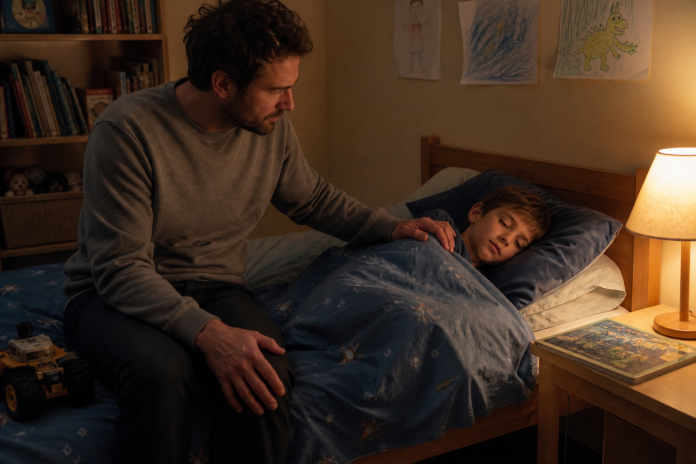
Father sitting on the edge of a child's bed at bedtime with his hand resting on the duvet over the child's shoulder, a small lamp on, bookshelf and drawings on the wall

Quick Guide

Reiki can give a family a shared way to be calm together: a few minutes of stillness with a hand on a shoulder at bedtime, a quiet routine before an exam, a way to sit with a relative who is ill. Those are real and worth having. What Reiki cannot do for a family is make fevers pass faster, help bones heal, change exam results, send calm to a child in another building, or protect anyone travelling, and the earlier version of this page claimed all of those. This guide keeps the family practice, sets out the consent rules that matter especially with children, and is clear about when a child’s illness or injury needs a doctor rather than a hand.

The old article was a warm account of one family attuning a four-year-old, “scanning each other to find the areas in need”, treating sports injuries and fevers with Reiki, and sending energy to a teenager five minutes before his maths exam. The warmth is worth keeping. The claims are not, and one of them, that with Reiki “illness works through the process quicker and injuries heal faster”, is the kind of belief that keeps a child with a broken wrist away from an X-ray.

What a family practice can honestly be

  • A bedtime routineFive minutes sitting on the edge of the bed with a hand resting on a child’s shoulder or back, breathing slowly, saying little. Children settle to this reliably, for the same reasons anyone does: warmth, stillness and undivided attention.
  • A shared way to stopFamilies run on schedules. A weekly half hour where everyone lies on the floor with hands on their own chest and nobody has to do anything is a small counterweight, and children often ask for it once they have tried it.
  • A way to be presentWhen a relative is ill or dying, children and adults alike can feel useless. Sitting quietly with a hand on theirs gives everyone something to do that is also the right thing to do. It is presence, not treatment.

None of these needs an attunement, symbols or scanning. How to do Reiki gives the basic self-practice that adults and older children can share.

Consent, and why it matters more with children

Reiki lineages teach that a session should only be given with the recipient’s permission, and in a family that rule needs sharpening rather than relaxing. Children cannot easily refuse a parent, and a practice that is meant to be calming becomes something else if it is imposed. Some rules that keep it honest:

  1. Ask every time, and take no for an answer. “Would you like a quiet few minutes with my hand on your back?” A shrug is a no. A child who says yes tonight may say no tomorrow.
  2. Keep touch where the child already welcomes it. Shoulder, back, head, hand. Nowhere else, and never over pyjamas that a child would rather keep to themselves.
  3. Do not “scan” or “find areas in need”. Telling a child where their energy is stuck teaches them to distrust their own body and to look to you for the diagnosis. If something hurts, that is a matter for a doctor.
  4. Do not attune young children. A ceremony that initiates a four-year-old into a lineage is a decision the child cannot understand or consent to. Wait until they are old enough to ask for it themselves.
  5. Do not make it a family identity. A child who grows up hearing that the family is “special and different” because of Reiki may find it hard to say, later, that they do not believe in it. Keep it as one calm thing you do, not who you are.

Illness and injury: what the hand is for

Situation What a calm hand can do What has to happen first
A child with a fever or cold Comfort while they rest; a reason to sit with them Fluids, rest, and a doctor if the fever is high, prolonged, or comes with a rash, stiff neck, breathing difficulty or unusual drowsiness
A sports injury Reassurance while you decide what to do Assessment. Swelling, inability to bear weight, deformity or pain on the bone means an X-ray, today
A broken wrist at a friend’s house Sitting with the friend until an adult takes over Immobilisation and emergency care. A teenager “giving Reiki” to a fracture is a child needing to be told to call a parent
Exam nerves A calm five minutes at the kitchen table before leaving Nothing else; nerves are normal. Sending energy from home during the exam does nothing, and the child feeling “really good” is the child’s own doing
Sibling fights A parent who is calm enough to referee Ordinary parenting. Symbols do not heal relationships; conversations do
A relative in chemotherapy Company, a hand, and a reason to visit Their oncology team’s plan, unchanged. Ask the ward before touching; hands-off over treated areas
Pregnancy A partner’s hand on the belly at bedtime, which most people like Antenatal care, unchanged. Nothing reaches the baby except your calm

The NCCIH is clear that Reiki has not been shown to help any condition, and the same applies to children. The Reiki safety guide covers the boundary in general; for a child, the boundary is simply that a parent’s hand is for comfort and a doctor is for illness, and the two are never in competition.

On sending Reiki to family members far away. Many families like the idea of stopping to “send” calm to someone at a job interview, in hospital or on a flight. As a ritual of good wishes it is harmless and can be a nice thing to do together. Nothing reaches the person, so tell them you thought of them, which is what actually lands. Understanding long-distance Reiki explains why.

Teaching Reiki within a family

Adults in a family may all take a Level 1 course together, and that can be a pleasant shared project. Giving each other attunements as a Christmas present, as the old article described, is a different thing: it presents a ceremony as a gift, to people who may feel unable to decline it in front of the family. Offer the course; let each person decide. Teenagers who are curious can learn the self-practice from a parent without any ceremony, and decide about training when they are adults. Reiki for beginners explains what a course involves and how to choose one.

Key Takeaways

  • A family Reiki practice is a shared way to be calm: bedtime stillness, a weekly lie-down, presence with someone ill.
  • It does not speed illness, heal injuries, change exam results or reach people at a distance.
  • Consent matters more with children: ask every time, keep touch where it is welcome, never scan or diagnose, do not attune young children.
  • Illness and injury go to a doctor first; a hand is for comfort while that happens.
  • Offer courses to adults; do not present attunements as gifts people cannot refuse.

Related reading

Frequently Asked Questions

1. What can Reiki do for a family?

Give you a shared way to be calm: a few minutes of stillness at bedtime, a weekly lie-down together, and a way to be present with a relative who is ill.

2. Can Reiki help a child’s fever or cold pass faster?

No. It can comfort a child while they rest. Fluids, rest and a doctor when needed are what treat the illness.

3. Can Reiki help injuries heal faster?

No. Swelling, inability to bear weight, deformity or pain on a bone needs assessment and often an X-ray. A hand is for reassurance while you arrange that.

4. Should I give a child Reiki without asking?

No. Ask every time and accept a no. Children cannot easily refuse a parent, so consent needs to be clearer, not looser.

5. Is it all right to attune a young child?

No. It is a ceremony the child cannot understand or consent to. Wait until they are old enough to ask for it themselves.

6. Where should a parent’s hands go?

Shoulder, back, head or hand, where the child already welcomes touch. Nowhere else.

7. Should I scan my child for blocked areas?

No. It teaches a child to distrust their body and look to you for a diagnosis. If something hurts, see a doctor.

8. Does sending Reiki before an exam help?

Nothing reaches the child. A calm five minutes together before leaving the house does help, and it is the child’s own composure that gets them through.

9. Can Reiki heal sibling fights?

No. A calmer parent can referee better, and conversations resolve fights. Symbols do not.

10. Can family members give Reiki to a relative in chemotherapy?

As company and a resting hand, with the ward’s permission and hands-off over treated areas, yes. It does not affect treatment or outcome.

11. Is Reiki safe during pregnancy?

A partner’s hand on the belly at bedtime is pleasant and low-risk. Nothing reaches the baby except your calm; antenatal care is unchanged.

12. Should we give family members attunements as gifts?

No. Offer the course and let each person decide. A ceremony presented as a gift in front of the family is hard to decline.

13. Can teenagers learn Reiki?

They can learn the self-practice from a parent without any ceremony, and decide about training as adults.

14. Does Reiki make a family more compassionate?

Sitting quietly together regularly tends to make people gentler with each other. That is the routine, not the energy.

15. When does a child’s symptom need a doctor rather than a hand?

High or prolonged fever, rash, stiff neck, breathing difficulty, unusual drowsiness, any injury with swelling, deformity or inability to bear weight, and anything that worries you.

Final thoughts

What Reiki can do for a family is give it a habit of stillness and a way to be gentle with each other, which is not nothing in a busy house. What it cannot do is any of the medical or magical things the old version of this page promised, and a family that believes those things is a family that may one day sit with a hand on a child’s wrist when they should be in a car to the hospital. Keep the hand. Keep the quiet. Keep the doctor’s number where it always was.

Evidence statements checked against the NCCIH Reiki overview on 26 September 2026. Nothing here replaces medical advice for a child.

Reiki’s “Healing Power”: Why Case Studies Cannot Show It, in Brief

Short answer

This page used to present a Reiki master’s own case studies as proof of Reiki’s “healing power”. Case studies cannot show that. A practitioner sees clients who feel better after a session, remembers those who improved, and rarely learns about those who did not; illnesses also rise and fall on their own. That is why controlled studies exist, and why, when Reiki is tested against sham Reiki, the “healing power” turns out to be rest, touch, attention and expectation. The honest account of what Reiki can and cannot do is now in one place.

Read the full picture

What the studies actually found, how sham-Reiki comparisons work, why anecdotes mislead even honest practitioners, and the difference between feeling better and being treated.

What Does Research Say About Reiki? Evidence and Limits

Why a practitioner’s case studies mislead

  • Survivorship. Clients who improve come back and say so. Clients who did not quietly stop booking. The practitioner’s file is a record of the first group.
  • Natural course. Back pain, colds, low mood and many chronic conditions fluctuate. A session booked at a low point will often be followed by improvement whatever happens in the room.
  • Parallel treatment. Most clients are also seeing a doctor, taking medication or changing something. The Reiki session gets the credit.
  • Reported feeling is not measured change. “I felt lighter” is real and worth having. It is not a change in an X-ray, a blood test or a diagnosis.

None of this makes a practitioner dishonest; it makes them human. The NCCIH summarises what the controlled evidence shows, and how Reiki works explains where the genuine calm comes from.

Reiki vs Faith Healing: How They Differ, Where They Overlap, and What Each Honestly Offers

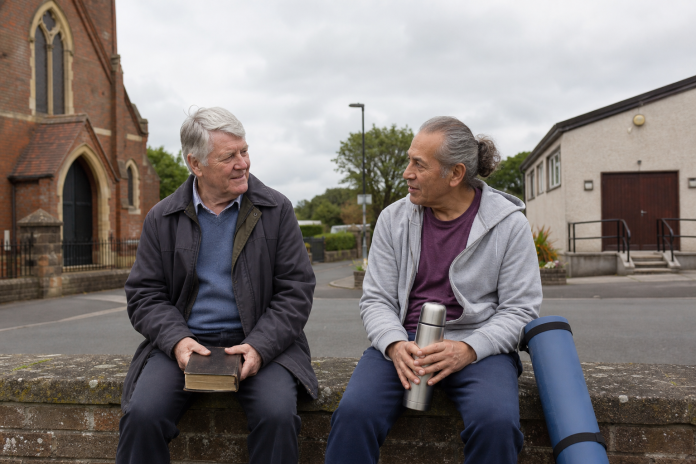
Two older men talking on a bench outside a small brick church and a community hall, one with a bible in his lap, the other with a folded yoga mat

Quick Guide

Reiki and faith healing both involve laying hands on a person with the intention that they be well. They differ in what is invoked (a universal energy versus a named God), in method (fixed hand positions and symbols versus prayer), and in setting (a treatment room versus a church, prayer meeting or bedside). They are alike in the most important respect: neither has been shown to affect the course of any illness, and both can comfort people. This guide compares them fairly, explains what each can honestly offer, and is clear about the one danger they share, which is being used instead of medical care.

The old version of this page concluded that Reiki and faith healing “both produce or affect the ability of the body to heal” and that “it takes faith no matter which path you choose”. The second point is fair; the first is not supported for either. A comparison is still worth making, because people from religious backgrounds often ask whether Reiki conflicts with their faith, and people drawn to Reiki often want to know how it differs from what happens in a healing service.

The comparison

Reiki Faith healing
Origin Japan, 1920s; Mikao Usui Ancient; present in Christianity, Islam, Judaism and many other traditions
What is invoked An impersonal universal energy; no deity God or the divine, by name, usually through prayer
Who acts A trained practitioner, described as a channel A minister, elder, healer or congregation; the healing is attributed to God, not the person
Method Set hand positions, sometimes symbols; silence; 30 to 60 minutes Prayer, laying on of hands, sometimes anointing with oil; minutes rather than an hour
Belief required None; practitioners say it works regardless Usually central; the recipient’s faith is often held to matter
Setting Treatment room, home, hospital volunteer programme Church, prayer meeting, hospital chaplaincy, bedside
Cost Paid sessions, or free through volunteer programmes Usually free; donations in some settings
Evidence of effect on illness None found (NCCIH) None found in controlled studies of intercessory prayer
Reported effect on how people feel Calm, rest, comfort Comfort, hope, community, meaning

Where they are alike

Strip both practices to what can be observed and they look similar. A person who is worried or unwell is touched gently by someone who wishes them well, in a setting designed to be calm or sacred, with an expectation that something good is happening. Those elements, touch, attention, setting and expectation, reliably make people feel better, and they are present in both. How Reiki works sets them out for Reiki; the same four apply to a healing service. Neither practice adds anything that has been detected beyond them, which is why studies of each find comfort without cure.

Where they differ, and why it matters

  • Faith healing is embedded in a community. A person prayed for in a congregation is also known, visited and supported. Much of what faith healing offers comes from that, and Reiki has no equivalent unless the practitioner builds one.
  • Reiki is secular and structured. It can be received by anyone without agreeing to anything, and its fixed format makes it easy to offer in hospitals and hospices where a religious practice might not fit.
  • Faith healing sometimes makes belief a condition. When healing does not come, some traditions attribute it to insufficient faith, which adds guilt to illness. Reiki’s “it works regardless” avoids that, though “you were not open to it” is the same move in different clothes.
  • Reiki charges. A paid service invites scrutiny of what is delivered in a way that a free prayer does not, which is one reason Reiki’s claims are more often tested.

Can a religious person practise or receive Reiki?

Many do. Reiki names no deity, requires no belief, and its five precepts (do not anger, do not worry, be grateful, work honestly, be kind) sit comfortably inside most ethical traditions. Some religious authorities have nonetheless objected to it. The United States Conference of Catholic Bishops, for example, issued guidance in 2009 advising Catholic institutions against it, on the grounds that Reiki lacks both scientific support and any basis in Christian faith, and that the “universal energy” it describes is neither God nor a natural force. That is a coherent position, and a religious reader who shares it should not feel pressured by a practitioner’s assurance that Reiki is “just relaxation”. Equally, a reader whose tradition has no objection loses nothing by treating a session as a quiet hour. What no one should do is treat either practice as a reason to skip treatment. Understanding Reiki covers the practice’s Buddhist and Shinto roots for readers weighing that question.

The shared danger. Every year people die of treatable conditions after relying on prayer, on energy healing, or on both, instead of care. Faith-healing traditions and Reiki lineages that are worth their name both say plainly that their practice sits alongside medicine and never replaces it. A healer, minister or practitioner who says otherwise is the one to walk away from, whatever their tradition. The Reiki safety guide sets out how to keep the boundary.

What each can honestly offer

Reiki can offer a calm, structured hour with light touch, available to anyone, in settings from a spare room to a cancer ward. Faith healing can offer hope, meaning, community and the sense of being held by something larger, within a tradition the person already trusts. Both can offer comfort to someone who is frightened or ill, and both are at their best when that is all they claim. Neither offers a cure, and the person who receives either should keep every appointment, every medication and every scan exactly where it is.

Key Takeaways

  • Reiki invokes an impersonal energy with fixed hand positions; faith healing invokes God through prayer. Both lay on hands.
  • Neither has been shown to affect any illness; both reliably comfort people through touch, attention, setting and expectation.
  • Faith healing comes with community; Reiki comes with secular access and structure.
  • Religious readers should weigh their own tradition’s guidance on Reiki rather than a practitioner’s reassurance.
  • The danger both share is replacing medical care, and neither should ever be used that way.

Related reading

Frequently Asked Questions

1. What is the difference between Reiki and faith healing?

Reiki invokes an impersonal universal energy through set hand positions; faith healing invokes God through prayer and laying on of hands. Both are hands-on and neither has been shown to affect illness.

2. Is Reiki a form of faith healing?

No. It names no deity, requires no belief, and has a fixed secular format. It shares the laying on of hands and the hope of wellness, nothing more.

3. Does either one actually heal?

Controlled studies of Reiki and of intercessory prayer have not found effects on illness. Both reliably make people feel comforted.

4. Why do people feel better after both?

Gentle touch, attention, a calm or sacred setting and the expectation of benefit all change how people feel. Both practices provide all four.

5. Can a Christian, Muslim or Jewish person receive Reiki?

Many do, since it requires no belief. Some religious authorities advise against it; readers should weigh their own tradition’s guidance rather than a practitioner’s assurance.

6. What have religious authorities said about Reiki?

The U.S. Conference of Catholic Bishops advised Catholic institutions against it in 2009, citing lack of scientific support and lack of basis in Christian faith. Other bodies have taken varied positions.

7. Does faith healing require belief?

In most traditions the recipient’s faith is held to matter. Reiki practitioners say belief is not required, which avoids blaming the recipient when nothing changes.

8. Which is safer?

Both are low-risk as practised. The shared danger is using either instead of medical care, which has caused avoidable deaths in both contexts.

9. Does Reiki use prayer?

No. Sessions are usually silent. Some practitioners set a private intention, but no prayers or deities are part of the practice.

10. Does faith healing use hand positions or symbols?

No. It uses prayer and laying on of hands, sometimes anointing with oil, and takes minutes rather than an hour.

11. What does faith healing offer that Reiki does not?

Community, shared meaning, and a tradition the person already trusts. Much of its comfort comes from being known and supported by a congregation.

12. What does Reiki offer that faith healing does not?

Secular access for people of any or no faith, a fixed structure, and a format that fits hospitals and hospices where religious practice might not.

13. Is it wrong to use both?

Not if your tradition permits it and neither replaces treatment. Many people pray and also have a calm hour of Reiki.

14. Do the stories of miraculous healings prove anything?

They are accounts of hope and meaning within a tradition. They are not controlled evidence, and neither practice’s advocates should present them as such.

15. What should a healer or practitioner never say?

That their practice can replace medication, a scan, surgery or therapy. In any tradition, that is the sentence to walk away from.

Final thoughts

Reiki and faith healing are two ways of doing something people have always done: placing a hand on someone who is suffering and wishing them well. One does it in the language of energy, the other in the language of God. Both comfort; neither cures. Choose according to your own convictions, take the comfort each honestly offers, and let medicine do the healing.

Evidence statements checked against the NCCIH Reiki overview on 26 September 2026.

Reiki for Plants: A Grounded Gardening and Care Guide

A gardener observes a potted plant beside a window with a watering can set aside.

Quick Guide

Reiki for plants is best understood as quiet, attentive time spent with the plants you care for, not as a growth method or a cure for disease. Plant health depends on light, water, soil, drainage and pests, and no amount of intention replaces those basics. The National Center for Complementary and Integrative Health says Reiki has not been clearly shown to be effective for any health-related purpose and that there is no scientific evidence for the energy field it describes; nothing in that evidence changes for plants. What a calm routine beside your plants can do is make you a more observant gardener, which is where most of the benefit comes from. This guide shows how to combine the two honestly.

Plenty of people who practise Reiki also keep houseplants or a vegetable bed, and it is natural to bring the two together. Sitting with a plant for a few minutes, noticing its leaves and silently wishing it well is a pleasant ritual, and the attention it demands tends to make you a better caretaker.

The problem starts when the ritual is sold as the reason the tomatoes grew, or as a substitute for finding out why the fern is dying. This guide keeps the practice and drops the promise: what plants actually need, what Reiki time can honestly add, a routine that combines both, and how to tell a plant that improved because of care from one you simply noticed more.

What plants actually need

Every plant problem comes back to a short list of physical conditions. Before any ritual, these are the questions worth asking.

  • LightThe right amount for the species. Too little produces pale, stretched growth; too much scorches leaves. Moving a plant a metre closer to or further from a window often solves more than anything else.
  • WaterMost houseplants die from overwatering, not neglect. Check the growing medium with a finger before watering, and learn whether your plant likes to dry out between drinks.
  • Soil and drainageA pot with no drainage hole, or a mix that stays soggy, starves roots of air. Repotting into a suitable mix with drainage is routine maintenance, not a last resort.
  • Pests and diseaseSticky residue, webbing, holes or spots usually mean an insect or fungal problem. Each has a specific, practical fix, and none of them responds to intention alone.

If you are unsure what a plant needs, look up the species by name. Care differs enormously between a succulent, a fern and a tomato seedling.

What Reiki time with plants can honestly be

Reiki is a spiritual and relaxation practice. The National Center for Complementary and Integrative Health says it has not been clearly shown to be effective for any health-related purpose, that there is no scientific evidence for the energy field it describes, and that no harmful effects have been reported. People may still find sessions relaxing and meaningful, and that is a fair reason to practise.

Applied to a garden, the honest benefits are the ones you can see. A few quiet minutes beside a plant each day means you notice the first yellow leaf, the first aphid and the dry pot before they become a crisis. The pause itself is a small act of mindful attention, and NCCIH’s summary of meditation and mindfulness research reports modest, real benefits for stress and mood from that kind of practice, while noting it is not a treatment for disease. In other words, the person doing Reiki with plants gets something out of it. The plant benefits from the attention that comes with it.

Our article on what Reiki research does and does not show goes into the evidence in more depth, and the guide to mindful Reiki practice describes the attentive, unhurried approach this routine borrows.

A simple routine that combines both

  1. Look first. Before you touch anything, spend thirty seconds looking at the whole plant: new growth, leaf colour, the top of the soil, the underside of a few leaves.
  2. Check the basics. Push a finger into the growing medium. Is it dry, damp or wet? Is the plant leaning toward the light? Is there anything on the leaves that was not there last week?
  3. Adjust what needs adjusting. Water, turn, move, wipe, prune or repot based on what you found. This is the part that changes the plant.
  4. Take your quiet minute. Sit or stand near the plant, hands resting in your lap or hovering near the pot if that is your practice. Breathe slowly and hold a simple intention of care. Do not bend leaves or press the soil.
  5. Write one line. Date, plant, what you saw, what you did. Over a month this note tells you far more than memory will.

The ritual sits after the care, not instead of it. If the quiet minute comes first, it is easy to feel you have done something for the plant and skip the watering can.

Common problems and where Reiki fits

What you see Likely cause Practical fix Where Reiki fits
Yellow lower leaves, soggy soil Overwatering, poor drainage Let the mix dry, check the drainage hole, repot if waterlogged Quiet time while you wait, not more water
Pale, stretched stems Too little light Move closer to a window or add a grow light None needed; move the plant
Crisp brown leaf edges Underwatering or dry air Water thoroughly, check more often, group plants to raise humidity The daily check that catches dryness early
Sticky leaves, tiny insects Aphids, scale or mealybugs Wipe or rinse leaves, isolate the plant, treat as advised for the pest None; this needs a physical response
Seedlings collapsing at the base Damping-off fungus Improve airflow, avoid overwatering, use clean trays and fresh mix None; prevention is about conditions
Slow growth in a healthy-looking plant Season, pot size or nutrients Check whether it is dormant, root-bound or unfed Patience and observation

The pattern in the last column is deliberate. Reiki belongs in the moments where nothing physical is left to do, or where the next step is simply to watch and wait. It never replaces water, light or pest control.

Why plants seem to respond to attention

Many people report that their plants did better once they started a Reiki routine, and they are often right. The explanation is usually simpler than an energy transfer. A person who visits a plant every day waters it on time, catches pests early, turns it toward the light and notices when it has outgrown its pot. Attention produces care, and care produces growth.

There is also a well-documented habit of mind at work. Britannica describes confirmation bias as the tendency to notice and remember what supports a belief we already hold. If you expect Reiki to help, the new leaf after a session stands out and the plant that declined despite sessions fades from memory. The garden note from the routine above is the antidote: it records every plant, not just the ones that flattered the theory.

Boundary note. Reiki time with plants is attention and care, not a growth method or a treatment. A plant that is wilting, spotted, infested or collapsing needs its light, water, soil and pest situation sorted out, and a persistent problem in a tree, a crop or a valuable plant deserves advice from an experienced grower, a nursery or a local horticultural service. Do not delay that advice for a few more sessions, do not sell or promise Reiki as a fix for plant disease, and do not treat a bad season as a verdict on your spiritual worth. If you garden food crops, follow ordinary food-safety practice regardless of any ritual.

Keeping a garden note that stays honest

A one-line note each day is the most useful habit in this guide. It also keeps the Reiki practice honest by separating what you observed from how you felt.

  • Record the plant, the date and what you saw. “Monstera, 14th, new leaf unfurling, soil damp.”
  • Record what you did. “Turned it a quarter turn, no water.”
  • Record the ritual separately. “Five quiet minutes, felt calmer.” This is a fact about you.
  • Review monthly. Look for patterns in watering, light and pests, not in session counts.
  • Writing “Reiki worked” next to a new leaf. You cannot know that, and the note stops being useful.
  • Skipping the plants that declined. They are the most informative entries you have.
  • Judging your practice by the garden. A hot summer or a cold windowsill is not feedback on your ability.
  • Replacing a species care guide with intuition. Look the plant up; the answer usually exists.

Plants, pets and the wider garden

If you already practise Reiki with animals, the same principles carry over. Our guides to animal Reiki and Reiki for pets make the same point: a calm presence is pleasant for everyone, and it never replaces a vet. With plants there is one extra practical overlap worth knowing. Many common houseplants, including lilies, pothos and dieffenbachia, are toxic to cats and dogs, so a Reiki corner that holds both plants and pets needs the plants placed out of reach.

For the wider picture of how people use the practice beyond the treatment table, see our overview of everyday applications of Reiki. If you set intentions as part of your sessions, the guide to personal mantras for Reiki sessions shows how to phrase them as reminders rather than guarantees, which is exactly the right frame for a garden.

Key Takeaways

  • Plant health depends on light, water, soil, drainage and pests; Reiki does not change any of those.
  • Reiki time with plants is honest as attention and calm, and the attention is what improves the garden.
  • Do the physical care first and the quiet minute afterwards, so the ritual never replaces the watering can.
  • Keep a one-line daily note that separates what you saw and did from how the session felt.
  • A plant with a persistent problem needs horticultural advice, and a bad season says nothing about your spiritual worth.

Related reading

Frequently Asked Questions

1. Can Reiki make plants grow faster?

There is no evidence that it can. Growth depends on light, water, soil, temperature and the plant’s season. Reiki time can make you more attentive, and attentive care is what speeds growth.

2. Is it safe to do Reiki with plants?

Yes, as long as you are not bending leaves, pressing the soil or disturbing roots to perform a session. No harmful effects of Reiki have been reported, and a quiet minute beside a pot does no harm to the plant.

3. Do I need to touch the plant?

No. Many practitioners rest their hands in their lap or hold them near the pot. Touch adds nothing for the plant and can damage delicate leaves or seedlings.

4. How long should a plant Reiki session last?

A few minutes is plenty. The useful part is the daily visit and the close look that comes with it, not the length of the session.

5. Can Reiki cure a diseased or infested plant?

No. Pests and diseases need physical responses such as rinsing leaves, isolating the plant, improving airflow or treating the specific problem. Delaying that for more sessions usually makes things worse.

6. What about Reiki-charged water for plants?

Water that has been held or blessed during a session is still ordinary water, which plants need anyway. Use it if the ritual is meaningful to you, but water according to the plant’s needs, not the session schedule.

7. Why did my plants improve after I started doing Reiki?

Most likely because you started visiting them every day. Daily attention catches dry soil, pests and light problems early. A garden note will show whether the improvement tracks your care rather than the sessions.

8. Should I do Reiki before or after watering and care?

After. Do the physical checks and adjustments first, then take your quiet minute. That order stops the ritual from quietly replacing the care.

9. Can I do distance Reiki for a garden or a tree?

You can hold the intention from anywhere if that is part of your practice. It will not change the tree’s water, light or pest situation, so it should sit alongside a real visit and real care, not replace them.

10. Does Reiki help seeds germinate?

Germination depends on moisture, warmth, light requirements for the species and seed quality. Follow the packet instructions. Reiki time can sit alongside that but does not change the outcome.

11. What should I write in a garden note?

Date, plant, what you observed, what you did, and in a separate sentence how the quiet minute felt. Keep the feeling and the observation apart so the note stays useful.

12. Are there houseplants that are unsafe around pets?

Yes. Lilies, pothos, dieffenbachia and several others are toxic to cats and dogs. If pets share your plant space, place those plants out of reach and check each species before buying.

13. Does a bad growing season mean my Reiki is not working?

No. A hot summer, a dark winter windowsill or a pest outbreak is a growing condition, not feedback on your practice or your worth. Fix the condition and keep the ritual if you enjoy it.

Final thoughts

A garden rewards attention, and a Reiki routine is one way to make sure you give it. Keep the two roles clear: the finger in the soil, the move toward the window and the rinse of an aphid-covered leaf change the plant; the quiet minute afterwards is for you. Practised that way, Reiki for plants is an honest, calming habit that happens to produce better gardeners, and there is no need to claim more.

Evidence statements checked against the National Center for Complementary and Integrative Health and Britannica on 30 September 2026.