

Quick Guide
The chakras are a symbolic map from Indian yogic tradition: seven centres running from the base of the spine to the crown, each linked to a theme such as safety, creativity, confidence, love, expression, insight and meaning. “A blocked chakra” is the tradition’s way of saying that one of those areas of life feels stuck. Used that way, the map can be a useful prompt for reflection. It is not anatomy, it cannot be measured, and it should never be used to explain a physical symptom or a mental-health condition. This guide gives you the seven themes, the questions each one raises, and a clear line between reflection and things that need a clinician.
Most articles on this subject tell you that a blocked root chakra makes you sick, a blocked solar plexus makes you afraid, and a blocked crown makes you depressed. That framing does two unhelpful things at once. It turns feelings that everyone has into faults in an invisible system, and it quietly relabels medical and mental-health problems as energy problems. There is a better way to use the chakra map, and it starts with being honest about what the map is.
What the chakras are, and are not
The seven-chakra system most people know comes from medieval Indian tantric texts, filtered through twentieth-century Western writers who added the rainbow colours and the psychological themes. Within yoga, Reiki and many energy-healing traditions, the chakras are described as centres where life energy gathers, and a “block” as a place where it does not flow. Practitioners use the map to structure a session or a meditation.
Outside those traditions, the chakras are not part of anatomy or physiology. No instrument detects them, and no study has shown that anything at those points is blocked or flowing. That is not a criticism of the map; it is a description of what kind of thing it is. A chakra is like a compass point or a mood word: a way of organising experience, not a structure in the body. The same distinction applies to Reiki’s own energy explanation, which what research says about Reiki covers in detail.
The seven chakras as reflection prompts
Read each entry as a question about an area of your life, not as a symptom checklist. If a theme rings true, that is useful information about where you feel stuck. It is not a finding about energy.
Seven themes, seven questions
- Root (base of spine): safety and stability. Traditional “block” signs: feeling unsafe, insecure about money or home, distrustful. Ask instead: what in my life feels unstable right now, and what one practical step would steady it?
- Sacral (lower abdomen): pleasure and creativity. Traditional signs: low desire, no interest in making things, flatness. Ask: when did I last do something purely because I enjoyed it, and what is getting in the way?
- Solar plexus (upper abdomen): confidence and will. Traditional signs: self-doubt, difficulty deciding, feeling pushed around. Ask: where am I waiting for permission I could give myself?
- Heart (centre of chest): love and connection. Traditional signs: resentment, holding grudges, feeling cut off. Ask: which relationship do I keep avoiding, and what would an honest conversation look like?
- Throat: expression and truth. Traditional signs: swallowing what you mean, saying yes when you mean no. Ask: what have I not said this week that I needed to?
- Third eye (brow): insight and perspective. Traditional signs: confusion, losing the thread, inability to see the bigger picture. Ask: am I too close to a problem to see it, and who could give me an outside view?
- Crown (top of head): meaning and purpose. Traditional signs: emptiness, disconnection, “what is the point”. Ask: what did I use to find meaningful, and is there a small way back to it?
The colours (red through violet) and the Sanskrit names (muladhara to sahasrara) are part of the modern system and are pleasant to use in meditation. They carry no other significance.
Where reflection stops and care begins
This is the section the old version of this article did not have, and it is the most important one. Several of the traditional “blocked chakra” signs are also the ordinary signs of conditions that respond to treatment. Reading them through the chakra map can delay the help that actually works.
| Often described as a blocked chakra | What it may actually be | Who to see |
|---|---|---|
| Persistent low mood, emptiness, no pleasure in anything for weeks | Possible depression | Your doctor or a mental-health professional |
| Constant fear, worry, tension, trouble sleeping | Possible anxiety, or a response to real stress | Your doctor or a therapist |
| Loss of sexual desire or interest | Many causes: medication, hormones, relationship stress, low mood | Your doctor first |
| Digestive discomfort, “gut feeling” problems at the solar plexus | A digestive complaint that deserves examination | Your doctor |
| Throat tightness, voice problems, difficulty swallowing | Physical causes that need checking | Your doctor |
| Headaches, visual disturbance at the “third eye” | A medical symptom, not an energy one | Your doctor or optician |
| Feeling that nothing matters or that you would be better off gone | A crisis that needs immediate support | Emergency services or a crisis line today |
A simple rule keeps you safe: if a sign is physical, persistent, getting worse, or affecting your ability to work, sleep or care for yourself, treat it as a health matter first. The chakra map can wait; a diagnosis cannot. Mind-body approaches in therapy looks at which reflective practices have evidence behind them and how they sit alongside treatment.
Using the map well
If you enjoy the chakra system, here is a way to use it that keeps it honest.
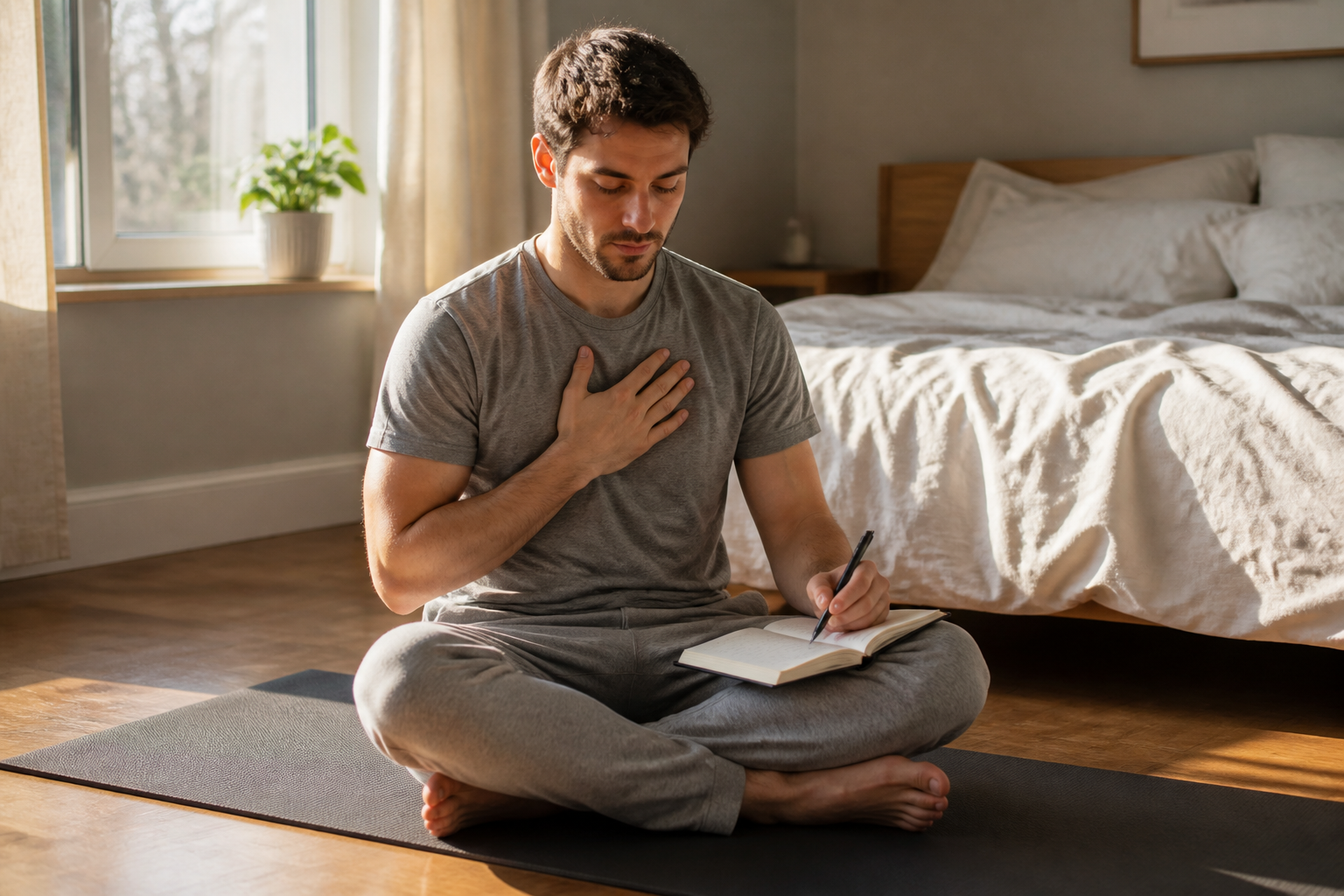
- Pick one theme a week and answer its question in a notebook. Keep the answers practical.
- Use the seven centres as a body-scan sequence in meditation or self-Reiki, resting attention at each point for a minute. How to do Reiki gives a hand-position routine that runs the same route.
- Treat colours, foods and stones as pleasant associations if you like them, not as remedies.
- Notice when a “block” is really a decision you have been avoiding, and make the decision.
- Do not diagnose yourself or anyone else. “Your heart chakra is blocked” is a judgement dressed as a reading.
- Do not attribute a physical symptom to a chakra, ever.
- Do not pay for “chakra clearing” as a treatment for an illness, mood problem or relationship difficulty.
- Do not stop medication, therapy or an appointment because a practitioner says the block is now cleared.
What about salt baths, colours and chanting?
The traditional remedies for a blocked chakra include salt baths, wearing or eating the chakra’s colour, and chanting. A warm bath is relaxing, colour can lift your mood, and chanting is a form of paced breathing that many people find calming. Enjoy them for those reasons. None of them acts on an energy centre, and none of them is a treatment. The same applies to Reiki sessions aimed at the chakras: pleasant, low-risk, and best described as rest with a theme.
Key Takeaways
- The chakras are a symbolic map for reflection, not a system in the body.
- “Blocked” is the tradition’s word for feeling stuck in an area of life; use it as a prompt, not a finding.
- Low mood, anxiety, loss of desire and physical symptoms need a clinician, not a chakra reading.
- Use the seven themes as weekly questions or a meditation sequence, and keep the answers practical.
- Never let a chakra explanation delay diagnosis or replace treatment.
Related reading
- A beginner’s guide to the seven chakras and healing crystals
- Chakra out of balance
- The psychology of tarot: mental wellness and reflection
- Reiki safety guide: risks, boundaries and medical care
- Reiki and depression: evidence, comfort and care choices
Frequently Asked Questions
1. What does it mean when a chakra is blocked?
Within yoga and energy traditions it means life energy is not flowing at one of seven centres. In practice it is a symbolic way of saying that an area of life, such as safety, expression or meaning, feels stuck.
2. Are chakras real?
They are real as a tradition and a map for reflection. They are not anatomical structures, cannot be measured, and no research shows anything at those points being blocked or flowing.
3. What are the seven chakras?
Root, sacral, solar plexus, heart, throat, third eye and crown, running from the base of the spine to the top of the head, each linked to a theme such as stability, creativity, confidence, love, expression, insight and meaning.
4. Can a blocked chakra make you physically ill?
No. Physical symptoms have physical causes and need a doctor. Attributing them to a chakra can delay the care that works.
5. Is a blocked crown chakra the same as depression?
No. Persistent low mood, emptiness and loss of pleasure are signs of possible depression and need a clinician. The chakra map is not a diagnosis.
6. How do I know which chakra is blocked?
Use each chakra’s theme as a question about your life and notice which one rings true. That tells you where you feel stuck; it does not tell you anything about energy.
7. How do you unblock a chakra?
Within the tradition, through meditation, breathing, Reiki or yoga. Practically, by naming the stuck area and taking a concrete step in it. Treat both as reflection, not treatment.
8. Do chakra colours, foods or crystals help?
They can be pleasant associations that support a mood or a meditation. They do not act on an energy centre and are not remedies.
9. Can a salt bath clear a chakra?
A warm bath is relaxing, and that is the benefit. Nothing is being cleared.
10. Can Reiki unblock chakras?
Reiki sessions are often structured around the chakras and many people find them restful. There is no evidence that anything is unblocked, so describe it as rest with a theme.
11. Should I see a chakra healer?
If you enjoy the practice, a session can be a pleasant hour. Avoid anyone who diagnoses you, links a physical symptom to a chakra, or sells clearing as a treatment.
12. Can I check my own chakras?
You can run through the seven themes as reflection questions. You cannot check an energy centre, and neither can anyone else.
13. What if the “block” is a symptom that keeps getting worse?
Treat it as a health matter and see a clinician. Persistent, worsening or disabling signs are never a chakra question.
14. Is it safe to use chakra meditation alongside therapy or medication?
Yes, as a relaxation practice. Never stop or change treatment because a practitioner says a chakra has cleared.
15. Where do the seven chakras come from?
From medieval Indian tantric texts, reshaped by twentieth-century Western writers who added the rainbow colours and psychological themes most people know today.
Final thoughts
The chakra map earns its place as a set of seven honest questions about where life feels stuck. Ask them, write down practical answers, and use the sequence as a calm body-scan if you enjoy it. Just keep the map in its lane. Feelings that persist, symptoms that are physical, and thoughts that frighten you belong with a clinician, and no amount of colour, salt or clearing changes that. Reflection and care can run side by side; they cannot substitute for each other.
Health statements reviewed on 26 September 2026. If you are in crisis, contact local emergency services or a crisis line now.
The article touches on the emotional and physical symptoms of blocked chakras. It would be interesting to see if there’s any scientific research linking these symptoms to the concept of energy centers in the body.
There might be a need for more interdisciplinary studies combining psychology, physiology, and traditional practices to explore these connections.
Overall, the article offers a solid introduction to chakras. It would be beneficial to include some historical context on how these concepts developed over time and their cultural significance.
While the article is well-written, I’m curious about the scientific evidence supporting the existence of chakras. Are these concepts widely accepted in scientific communities?
The article provides a comprehensive overview of the chakras and their functions. It’s clear and well-structured, offering useful information for those interested in the topic.
I agree. The explanations are straightforward and easy to understand, even for someone new to the concept of chakras.
The mention of color associations for each chakra is interesting. It would be beneficial to understand more about why specific colors are linked to these energy centers.
Indeed, the concept of color association could be rooted in ancient traditions or psychological effects. Further exploration would be fascinating.
The practical suggestions for unblocking chakras, like meditation and salt baths, are useful. However, it would be helpful to have more detailed guidance or examples on how to effectively practice these methods.