Quick Guide
The seven-chakra system is a spiritual map used in some yoga, Reiki and modern wellness practices: seven centres from the base of the spine to the crown, each associated with themes and colours. Crystal practitioners often add symbolic stone pairings. You can use these as prompts for reflection without treating them as anatomy, a diagnosis or a medical treatment. This guide explains the common modern map, its cultural context, and a gentle optional practice.
Where the chakra system actually comes from
Chakra is commonly translated as “wheel”. Chakra practices have roots in Indian spiritual traditions, including Tantra, rather than in medical anatomy. They have religious meanings beyond the simplified colour charts found in wellness shops. The British Museum’s introduction to Tantra provides cultural context for these practices. Different teachings use different maps; the chart below presents common modern associations, not one universal historical system.
The seven chakras and common modern pairings
| Chakra | Location | Reflection themes | Colour | Stones commonly paired |
|---|---|---|---|---|
| Root | Base of spine | Safety, stability, the basics of survival | Red | Black tourmaline, red jasper, smoky quartz |
| Sacral | Lower abdomen | Pleasure, creativity, relationships | Orange | Carnelian, orange calcite |
| Solar plexus | Upper abdomen | Confidence, will, personal power | Yellow | Citrine, tiger’s eye |
| Heart | Centre of chest | Love, compassion, grief | Green (sometimes pink) | Rose quartz, green aventurine |
| Throat | Throat | Expression, honesty, being heard | Blue | Lapis lazuli, sodalite, angelite |
| Third eye | Between the brows | Insight, imagination, clear thinking | Indigo | Amethyst, sodalite |
| Crown | Top of the head | Meaning, connection, perspective | Violet or white | Clear quartz, selenite |
The themes can supply seven check-in questions: do I feel safe, am I enjoying anything, do I feel capable, am I connected to people, am I saying what I mean, am I thinking clearly, and does anything feel meaningful? Signs your chakras are blocked explores that language as reflection, not diagnosis. Physical or emotional symptoms should not be explained away as chakra blockages.
What crystals can and cannot do
Crystals are not established treatments for anxiety or other health conditions. In a 2025 randomized study of 138 adults, participants used rose quartz or a lookalike placebo over 14 days. Anxiety reductions occurred among believers regardless of which object they received; the real crystal did not outperform the placebo. That study concerns one practice and sample, not every possible experience with stones, but it does not support a special therapeutic effect.
A smooth stone may be an optional object for attention: something to look at, hold comfortably, or keep nearby as a reminder of an intention. A favourite colour or texture can make a quiet moment more appealing. Those personal uses do not demonstrate that a mineral clears energy, heals tissue or changes a health condition. You can do the same reflection without buying any stones.
Two safety notes. Keep unidentified stones, mineral powders and coated crystals out of drinking water and out of your mouth; a shop’s “healing” label does not establish that an object is food-safe. Do not rely on a shungite pendant or any other crystal as protection from radiation or as a substitute for practical safety precautions.
A chakra and crystal practice that stays honest
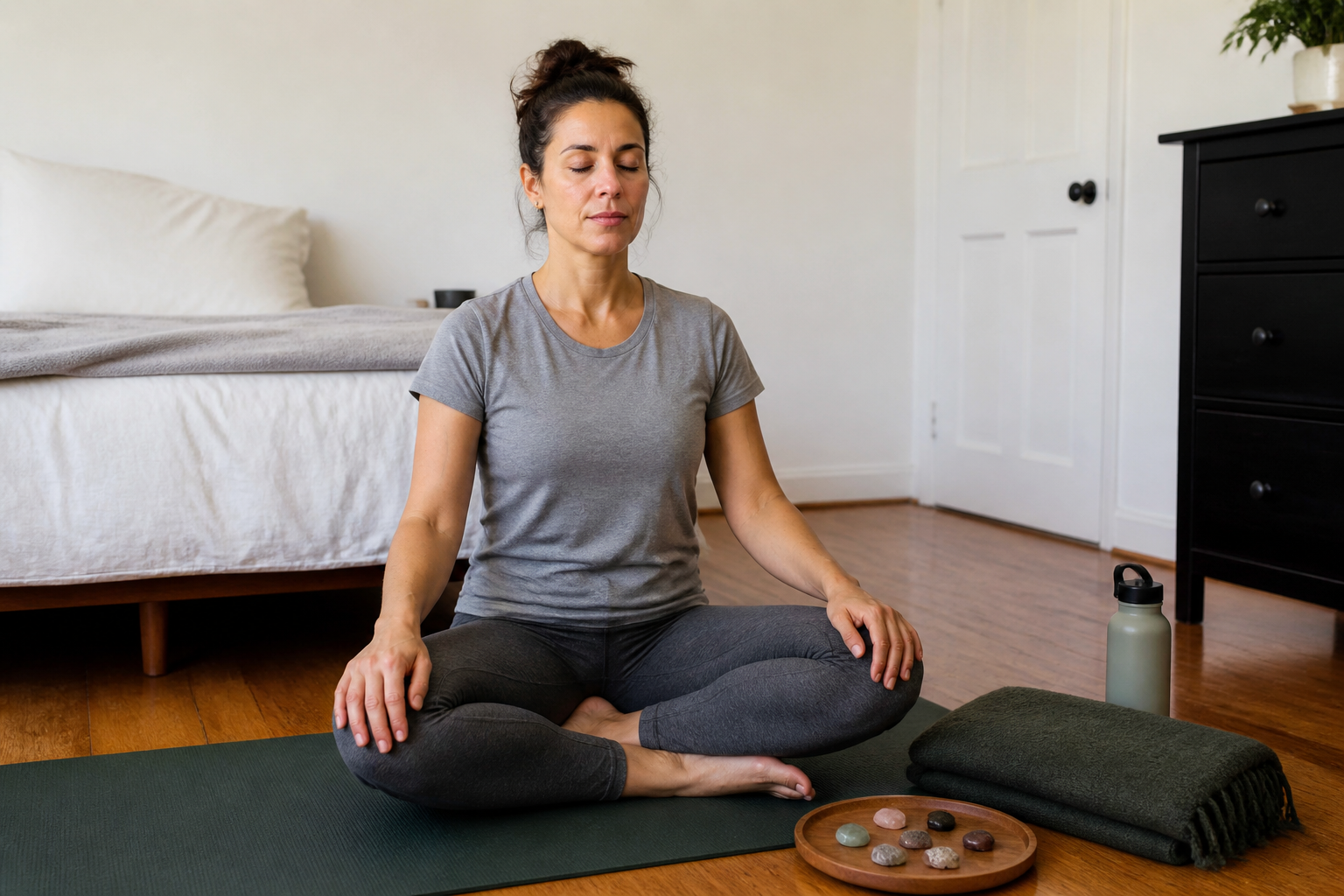
- Choose a comfortable position. Sit or lie down somewhere you can rest safely. Start with a few minutes; there is no required duration.
- Keep stones nearby, if you want them. A tray beside you or one smooth stone held loosely is enough. Do not place stones on your eyes, throat, sensitive areas or anywhere they could fall or cause pressure.
- Ask one theme question at a time. “Do I feel safe at the moment?” or “Am I saying what I mean?” Skip any question you do not want to explore.
- Let breathing stay comfortable. No breath holds, forced slow breaths or special breathing rate are required. Rest may feel pleasant, but calm is not guaranteed.
- Choose one practical next step. Note an answer if useful. Stop if the exercise becomes distressing; you do not have to push through emotions. Seek qualified support for persistent distress or symptoms.
Reiki self-practice uses a similar sequence of positions, and many practitioners combine the two; how to do Reiki gives the hand positions, and chakra work with Reiki shows how the map is used inside a session.
Claims to leave behind
- “Chakras get clogged with negative energy.” This is spiritual language, not an established physical explanation. Feeling stuck does not show that an energy centre is obstructed.
- “Trauma is stored in the chakras and must be deeply felt to release it.” A chakra map cannot diagnose or treat trauma. Do not force yourself to relive upsetting experiences during an exercise; stop and consider support from a qualified trauma-informed professional.
- “Eat the rainbow to feed each chakra.” Food colours can be used symbolically, but matching a meal to a chart is not an established way to repair a chakra or treat symptoms.
- “Smudging clears the auric field.” Smoke ceremonies have particular cultural and spiritual meanings; they are not merely interchangeable wellness accessories. Those meanings do not establish a measurable cleansing or health effect. Avoid smoke if it aggravates breathing, and observe fire safety.
- “Zip up your chakras for protection.” Imagery may feel comforting, but it should never replace practical boundaries, physical safety measures or professional care.
Where the map is genuinely useful
Used lightly, the seven themes offer one possible structure for a check-in. Some people enjoy the colours and stones; others prefer a notebook, a walk or no spiritual framework at all. None is a test of whether your body is balanced. If a concern needs action, focus on the action rather than on finding the “right” crystal. The Reiki safety guide explains boundaries around complementary practices and medical care.
Key Takeaways
- Chakras belong to spiritual traditions; a modern colour chart is not medical anatomy.
- Seven themes can serve as optional reflection prompts, not a diagnostic test.
- Stones may have personal meaning, but crystal healing is not an established treatment.
- Keep stones out of drinking water and do not rely on them for radiation protection.
- Do not force distressing emotions or replace qualified care with chakra work.
Related reading
- Signs your chakras are blocked: a reflective guide, not a diagnosis
- How to do Reiki: self-practice, training and limits
- Chakra work with Reiki
- Mind-body approaches in therapy: evidence and safety
- How does Reiki work? Tradition vs evidence
Frequently Asked Questions
1. What are the seven chakras?
The common modern map names seven centres: root, sacral, solar plexus, heart, throat, third eye and crown. Their colours and themes are spiritual or symbolic associations, not medical anatomy.
2. Where does the chakra system come from?
Chakra practices have roots in Indian spiritual traditions, including Tantra. Different teachings use different maps; modern colour-and-crystal charts do not represent one universal historical system.
3. Are chakras real?
Chakras are meaningful concepts in spiritual traditions. They are not established anatomical structures or a medical explanation for symptoms.
4. Can chakras be blocked?
“Blocked” is often spiritual or metaphorical language for feeling stuck. It does not establish a physical obstruction or identify the cause of a symptom.
5. Do healing crystals work?
Crystal healing is not an established medical treatment. A 2025 study of 138 adults found rose quartz did not outperform a lookalike placebo for anxiety; personal comfort with a stone is not proof of a therapeutic property.
6. Which crystal goes with which chakra?
Common modern pairings include red jasper for root, carnelian for sacral, citrine for solar plexus, rose quartz for heart, lapis or sodalite for throat, amethyst for third eye, and clear quartz for crown. These are symbolic associations, not proven effects.
7. Is it safe to drink crystal-infused water?
Keep unidentified, coated or decorative stones out of drinking water. A healing label does not establish that a mineral or coating is food-safe.
8. Does shungite protect from radiation?
Do not rely on a shungite stone as radiation protection. A pendant or crystal should not replace practical safety precautions.
9. How do I balance my chakras?
If you enjoy the framework, sit comfortably, keep any stone nearby, ask a theme question and choose one practical next step. There is no required placement or duration, and relaxation is not guaranteed.
10. Is trauma stored in the chakras?
A chakra map is not an established explanation or treatment for trauma. Do not force yourself to relive distressing experiences; stop and seek qualified support when needed.
11. Does eating foods of each colour feed the chakras?
Food colours may have symbolic meaning in a practice, but matching them to chakra colours is not an established way to repair a chakra or treat symptoms.
12. Does smudging with sage clear energy?
Smoke ceremonies can carry specific cultural or spiritual meanings, but these do not establish a measurable cleansing or health effect. Avoid smoke if it aggravates breathing and observe fire safety.
13. Can chakra work replace therapy or medical care?
No. Treat it as an optional spiritual or reflective practice, not a replacement for qualified care. Seek assessment for persistent or concerning symptoms.
14. How does the chakra map fit with Reiki?
Some Reiki practitioners use chakra themes to structure reflection or self-practice. This is a spiritual framework, not an established biological mechanism; practices vary.
15. What is the most useful thing about the chakra system?
Some people find the seven themes memorable prompts about safety, enjoyment, confidence, connection, expression, clarity and meaning. They are optional, not a test of health.
Final thoughts
If the chakra map appeals to you, use its questions gently and keep stones optional. Their value can be personal, cultural or spiritual without making them treatments. No purchase, exact placement or dramatic emotional experience is required. Keep practical safety and qualified care separate from symbolic practice.