

Quick Guide
Reiki can have a place in your health, but only as a comfort practice alongside proper care, never as a treatment. It does not remove illness, toxins, pain, migraine or depression, and any guide that says it does is wrong. What it can do is give a patient a calm, unhurried hour in a week full of appointments. This guide is written for people who are unwell or caring for someone who is: how to raise Reiki with your care team, how hospitals and hospices use it, what to tell a practitioner about your condition, and the handful of situations where extra care is needed.
The original version of this page promised that Reiki would rid you of “sicknesses, illnesses, toxins in the body, pain” and “get rid of depression”. None of that is true, and for someone who is ill it is harmful advice. This replacement keeps the one thing that was worth keeping, the idea that a gentle practice can sit beside your health, and puts it in its proper place.
The role Reiki can play when you are unwell
Illness fills the calendar with things done to you: tests, scans, infusions, dressings, questions. A Reiki session is one of the few appointments in that calendar where nobody examines you, nothing is measured, and the only expectation is that you rest. For many patients that is its value: an hour that belongs to them. Some also find the light touch comforting at a time when most touch is clinical, and some simply sleep. The NCCIH overview of Reiki is clear that it has not been shown to help any health condition; it is equally clear that it is generally low-risk, which is what makes it a reasonable thing to add for comfort.
How hospitals and hospices use it
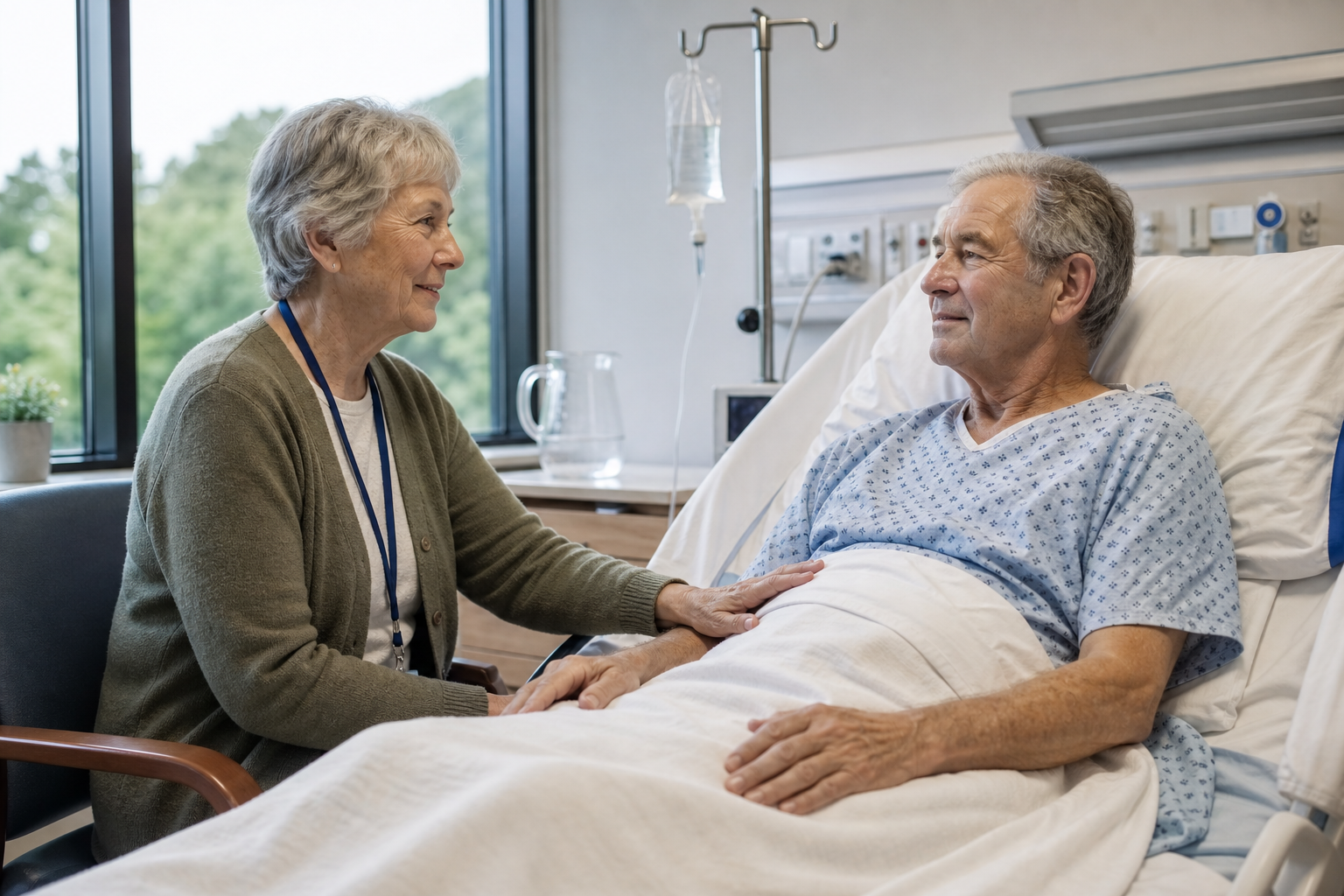
A number of hospitals, cancer centres and hospices in the United States, the United Kingdom and elsewhere offer Reiki through volunteer or integrative-care programmes. The way they frame it is instructive. It is offered as supportive care for relaxation and comfort, given in short bedside sessions of 15 to 20 minutes, delivered by volunteers who have been screened and trained in the setting’s rules, and never described as treatment. Patients can decline it at any time. If your hospital has such a programme, it is usually free and is a good way to try Reiki with the boundaries already set for you. If it does not, the same framing is the one to insist on from a private practitioner.
Talking to your care team
Most clinicians are relaxed about a patient having a relaxation practice and will simply want to know. Raise it in a routine appointment with a sentence like “I’m thinking of having Reiki sessions for relaxation; is there anything about my condition or treatment that makes that a bad idea?” The questions they may have are practical: whether you can lie flat, whether an area should not be touched, whether you have a device, and whether anything in the session might be confused with a symptom. Write their answer down and pass it to the practitioner.
| If you are living with… | Reiki can reasonably be… | Extra care |
|---|---|---|
| Cancer, during or after treatment | Short sessions, hands-off over treated or tender areas | Tell the team; report any new symptom to them, not the practitioner |
| Heart disease or a pacemaker | Ordinary sessions; the practice involves no electrical or pressure component | Mention the device; stop if you feel faint or have chest pain |
| Recent surgery | Hands away from the site; once your surgeon is happy for you to lie flat | No pressure anywhere near the wound |
| Chronic pain or arthritis | A calm hour that avoids painful joints | Keep your pain plan; do not stop medication |
| Diabetes | Ordinary sessions | Do not delay a meal or a dose to fit a session |
| Depression or anxiety, under care | A relaxation practice you mention to your therapist | Stop if stillness raises anxiety; keep therapy and medication in place |
| Pregnancy | Gentle or hands-off, no pressure on the abdomen | Tell your midwife or obstetrician |
| Epilepsy | Ordinary sessions in most cases | Tell the practitioner what to do if you have a seizure |
What to tell the practitioner
- Your diagnosis in plain words, and whether your care team had any specific advice.
- Any area that hurts, is bandaged, has a line or port, or has been treated recently.
- Whether you can lie flat, and for how long; a chair is a normal alternative.
- Whether you want hands-on or hands-off contact; you can change your mind mid-session.
- What you want from the session: rest and comfort, not treatment. Saying this out loud sets the tone.
What happens in a Reiki session describes the intake conversation where all of this belongs.
Claims to ignore, and why they matter more when you are ill
A healthy person who is told Reiki “removes toxins” loses nothing but money. A patient who believes it may skip a dose, delay a scan, or interpret a warning sign as “energy releasing”. These are the claims to walk away from:
- That Reiki removes illness, disease or “toxins”. It does not act on any disease process.
- That it treats back pain, migraine or irritable bowel syndrome. People may feel more comfortable after rest; the condition is unchanged.
- That it can “get rid of” depression. Depression needs a clinician; a calm hour is not a substitute for treatment.
- That feeling worse afterwards is a “healing crisis” or detox. Feeling worse is a symptom and belongs with your care team.
- That a practitioner can sense what is wrong with you, or send healing to you at a distance. Neither has any basis.
The Reiki safety guide lists further red flags and explains how to respond to a practitioner who oversteps.
For carers
If you are caring for someone who is ill, two things are worth knowing. First, a hospice or hospital Reiki programme is usually happy for a family member to sit in, and some will offer a short session to the carer too; take it if it is offered. Second, learning simple self-Reiki gives you a way to be still with the person you are caring for, a hand resting lightly on theirs, without needing to do or fix anything. That is often what both of you need most. How to do Reiki covers the basics, and the consent conversation applies just as much to a family member as to a stranger.
A word on cost. Illness is expensive. If money is short, a hospital or hospice programme is free, self-practice is free, and an hour of quiet rest at home is free. A private session is a reasonable thing to spend on if you can, and an unreasonable thing to be pressured into buying as a course of treatment.
Where the genuine health benefit lives
It lives in the same four places as every Reiki benefit: rest, gentle touch, someone’s attention and the expectation of feeling calmer. For a patient, those four are not trivial. Rest is often exactly what is prescribed and hardest to do; gentle touch is scarce in clinical settings; attention that asks nothing of you is rare; and expecting to feel calmer is a reasonable expectation that a session usually meets. How Reiki works explains those four ingredients, and how can Reiki help you matches them to specific situations, including surgery and long illness.
Key Takeaways
- Reiki has a place in health as a comfort practice alongside care, never as treatment.
- Hospitals and hospices offer it as short, optional, volunteer-led relaxation; copy that framing with any private practitioner.
- Tell your care team, ask for any specific cautions, and pass them to the practitioner.
- Claims about removing illness, toxins, pain or depression are false and are more dangerous for people who are ill.
- Feeling worse afterwards is a symptom for your clinician, not a healing crisis.
Related reading
- Reiki safety guide: risks, boundaries and medical care
- How can Reiki help you? Where it fits and where it doesn’t
- What does research say about Reiki?
- Reiki and depression: evidence, comfort and care choices
- Mind-body approaches in therapy: evidence and safety
Frequently Asked Questions
1. Can Reiki improve my health?
It can improve how a week of illness feels by providing a calm, unhurried hour. It does not improve the illness itself or any measurable health outcome.
2. Is Reiki safe if I am ill?
Generally yes, as light-touch relaxation. Tell your care team, avoid touch on treated or painful areas, and never use it in place of any part of your care.
3. Do hospitals offer Reiki?
Some do, through volunteer or integrative-care programmes, as short bedside sessions for comfort. It is offered as supportive care, not treatment.
4. Should I tell my doctor I am having Reiki?
Yes. Ask whether anything about your condition or treatment makes it unwise, and pass the answer to the practitioner.
5. Can Reiki remove toxins or illness?
No. It does not act on any disease process. This claim should be a reason to choose a different practitioner.
6. Can Reiki help with pain from arthritis, migraine or IBS?
You may feel more comfortable after resting, as with any quiet hour. The condition is unchanged, and your pain plan stays with your clinician.
7. Can Reiki treat depression?
No. A calm hour can be a pleasant addition for some people, but depression needs a clinician, and therapy or medication should not be changed because of a session.
8. What if I feel worse after a session?
Treat it as a symptom and tell your care team. It is not a healing crisis or a detox effect.
9. Can I have Reiki during chemotherapy?
Many cancer centres offer it. Keep sessions short, choose hands-off over treated areas, and report new symptoms to your team rather than the practitioner.
10. Is Reiki safe with a pacemaker?
The practice involves no electrical or pressure component, so it is generally considered fine. Mention the device and stop if you feel faint.
11. Can I have Reiki after surgery?
Once your surgeon is happy for you to lie flat, yes, with hands kept away from the wound and no pressure anywhere near it.
12. What should I tell the practitioner about my condition?
Your diagnosis in plain words, any cautions from your care team, areas to avoid, whether you can lie flat, and that you want rest rather than treatment.
13. Can a carer benefit from Reiki?
Yes. Some programmes offer sessions to carers, and simple self-Reiki gives a carer a way to be still with the person they look after.
14. Does Reiki cost money when you are ill?
Hospital and hospice programmes are usually free, and self-practice is free. Private sessions are paid; never buy a course sold as treatment.
15. Can a practitioner sense what is wrong with me?
No. Claims to diagnose by hand or to send healing at a distance have no basis, and a practitioner who makes them should not be treating an ill person.
Final thoughts
Reiki can belong in your health, in the modest place hospitals already give it: a short, optional, gentle hour offered for comfort, with every decision about your illness left where it belongs. Tell your care team, set the boundaries with the practitioner, and refuse every claim about toxins, cures and healing crises. What is left is small and real, and for someone who is ill, small and real is worth a great deal.
Evidence statements checked against the NCCIH Reiki overview on 26 September 2026.
Reiki’s potential benefits for mental health, such as reducing anxiety and depression, are noteworthy. These are issues that many people struggle with, and having alternative methods to address them can be very useful.
The connection between Reiki and chakra balancing is something I’ve heard before. It’s good to see a detailed explanation of how the practice works.
The concept of Reiki as an energy healing method is intriguing. I’d be interested to see more scientific studies validating its effectiveness.
I appreciate the detailed explanation of how Reiki can help with various issues, from mental clutter to physical pain. It seems like a holistic approach to wellness.
While the benefits of Reiki sound promising, it’s crucial to approach it with an open but critical mind. Complementary therapies can be beneficial, but they should be integrated with evidence-based practices.
I agree. It’s important to consider both conventional and alternative methods when looking at health and wellness.
Integration of various healing practices can provide a more comprehensive approach to health. It’s always good to explore and find what works best for each individual.
It’s fascinating how Reiki is linked to the Law of Attraction. The idea that positive energy can bring about positive outcomes has a certain appeal.