

Quick Guide
Gassho and joshin kokyu ho are meditation and breathing practices taught in some Japanese Reiki traditions. Gassho uses a palms-together gesture; joshin kokyu ho may add attention or imagery around the lower abdomen. Teaching varies by lineage. The gentle adaptations below are optional, not medical treatment or a guarantee of calm. Choose a comfortable position, breathe without forcing or holding, and stop if you feel unwell or distressed.
Teachers may describe these practices as opening or strengthening an energy channel. Treat that as a spiritual explanation, not a measurable health result. You can explore a gesture, attention practice or optional image without expecting a particular sensation or believing you must push through discomfort.
Where the practices come from
Gassho is a palms-together gesture associated with respect and meditation in Japanese Buddhist and Reiki contexts. Joshin kokyu ho is presented as a breathing meditation in Reiki teaching; translations, imagery and instructions vary. The International House of Reiki’s teaching on joshin kokyu ho is one practitioner’s account of its traditional context, not clinical evidence. The Understanding Reiki guide gives broader background. Avoid assuming that every school uses the same method or that a modern instruction can be traced directly to Usui.
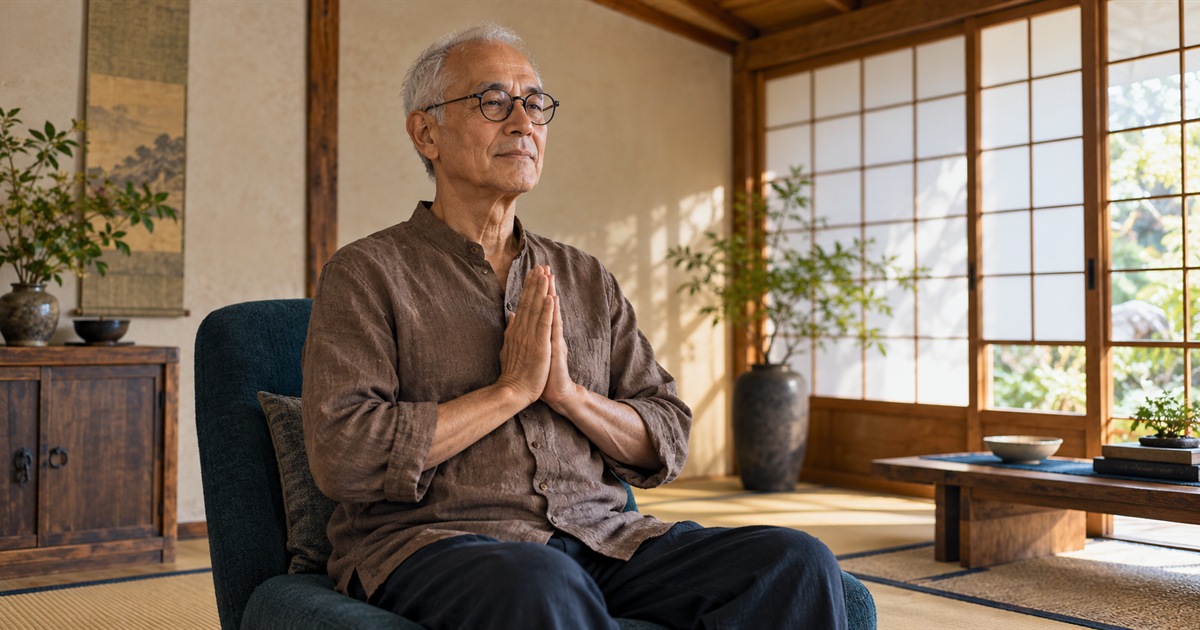
Gassho meditation
For this optional adaptation, use the hands as a gentle reminder to return your attention. A traditional-looking posture is not more important than comfort, accessibility or your ability to stop.
- Choose a supported position. A chair or another stable, comfortable seat is fine. Kneeling and sitting cross-legged are optional. Change position if you feel pain or numbness.
- Bring the palms together if comfortable. Hold them lightly near the chest, without pressing or straining. Rest your hands in your lap or separately if that suits you better.
- Keep breathing comfortable. Leave your eyes open or close them if you prefer. Breathe naturally; do not require nose-only breathing, a slower rate or a tongue position.
- Notice thoughts without a target. If attention wanders, return gently to a comfortable sensation or something you can see. You do not need to empty your mind or make a thought disappear.
- Choose a short duration. You might try a minute or two, or less. A timer is optional. There is no minimum duration to complete and no need to continue when uncomfortable.
- Finish without rushing. Lower your hands, look around and move when ready. Continue ordinary breathing. Stop earlier whenever you wish.
Choose a frequency that fits your circumstances, or decide not to continue. Regular practice is not an obligation, and bedtime practice does not guarantee better sleep. If a session increases distress, stop rather than treating endurance as progress.
Joshin kokyu ho
Some Reiki teachers use imagery of energy arriving through the crown and gathering around the hara or tanden, a traditional focus in the lower abdomen. That is a symbolic or spiritual description, not the route air takes through the body. The adaptation here keeps breathing natural and imagery optional; it does not require deep breaths, deliberate belly movement or a breath hold.
- Choose a comfortable seat. Use support as needed, with your hands resting wherever they feel comfortable.
- Orient to the room. Keep your eyes open if preferred. Notice the seat beneath you and allow your ordinary breathing to continue.
- On an ordinary in-breath, optionally imagine attention settling near the lower abdomen. Imagery is not required and air does not enter through the crown.
- Continue without holding. Let the next breath happen naturally. Do not strain, force a deep breath or wait at the top of an inhalation.
- On an ordinary out-breath, optionally imagine attention widening. You can instead notice the room or a neutral external object.
- Keep the practice brief. A minute or two is an optional starting point, not a prescription. Stop for dizziness, breathlessness, pain or distress and seek medical advice for concerning symptoms.
- Finish when ready. Let go of the imagery, look around and move gently. You do not need to place hands on the abdomen or feel grounded to finish.
Ask a teacher to explain which lineage or adaptation they teach. A course’s spiritual instructions do not override medical advice, comfort or consent. If breath-focused attention is unpleasant, choose an external focus or skip the exercise.
Traditional explanations and evidence limits
| A traditional explanation | How to interpret it cautiously |
|---|---|
| Gassho connects you to the heart of Reiki | A gesture may have spiritual meaning. It does not establish a health effect or require a particular emotional response. |
| Joshin kokyu ho strengthens a Reiki channel | This is a spiritual claim. Broader breathing research does not establish an energy channel or a benefit specific to this technique. |
| Regular practice makes you a stronger channel | Familiarity with a routine is not proof of transferred energy or healing ability. |
| Tongue placement connects meridians | Instructions vary. You can leave the tongue relaxed; do not force a position or treat it as necessary for health. |
| Attention in the hara gives spiritual protection | The lower abdomen can be an optional focus. Feeling steadier is not guaranteed, and imagery is not protection from illness or harm. |
The NCCIH guidance on relaxation techniques describes possible benefits and limitations of broader relaxation research, not proof for these named Reiki practices. Responses differ, and some people experience increased anxiety or intrusive thoughts. Keep necessary care in place and discuss concerning or persistent symptoms with a qualified health professional.
Common difficulties
- “My mind will not stop.” A quiet mind is not a requirement. You can notice a thought and return to a neutral focus, or end the session.
- “My knees or back hurt.” Change position or stop. Do not persist through pain to match a traditional posture.
- “I fall asleep.” Choose a supported setting where dozing will not put you at risk. You may prefer to rest instead. Discuss persistent or unexpected sleepiness with a health professional.
- “The breath feels forced.” Drop the breathing instruction and return to ordinary breathing. There is no required rate, depth or route.
- “I feel anxious when I sit still.” Stop, open your eyes and orient to your surroundings if helpful. You do not need to build tolerance alone. Ask a qualified professional about persistent distress, especially with a history of trauma.
Fitting them into a Reiki practice
A brief gesture or pause can be an optional part of self-practice or preparation for a session. It does not replace checking consent, comfort and boundaries. The self-Reiki practice guide offers adaptable ideas. There is no requirement to complete either meditation before giving or receiving Reiki.
Key Takeaways
- Gassho uses a palms-together gesture; joshin kokyu ho may use breath attention or imagery. Teaching varies.
- Choose comfort and accessibility over a traditional-looking posture.
- Use ordinary breathing without forced depth, nose-only rules or deliberate holds.
- Energy-channel explanations are spiritual claims, not established health effects.
- Stop for discomfort or distress; these practices do not replace appropriate care.
Related reading
- How to do Reiki: self-practice, training and limits
- Self-Reiki practice: a comfortable routine and clear limits
- Preparing for a Reiki attunement
- Mind-body approaches in therapy: evidence and safety
- Understanding Reiki: history, principles and what a session involves
Frequently Asked Questions
1. What is gassho?
A palms-together gesture associated with respect and meditation in Japanese Buddhist and Reiki contexts. In this adaptation, use a comfortable seat and ordinary breathing; hand position is optional.
2. What is joshin kokyu ho?
A breathing meditation taught in some Reiki traditions, sometimes with imagery focused near the lower abdomen. Instructions vary; imagery is spiritual or symbolic, not the physical route of air.
3. Do I need Reiki training to do these?
You can explore a gentle seated attention exercise without an attunement. For a lineage’s specific practice, ask a teacher about its instructions and adaptations. It is not suitable for everyone.
4. How long should I practise?
There is no required duration. A minute or two, or less, may be enough to try the optional adaptation. Stop when uncomfortable; longer is not necessarily better.
5. Do I have to kneel or sit cross-legged?
No. Choose a supported position that is comfortable and accessible. Change position or stop for pain or numbness.
6. Should my tongue touch the roof of my mouth?
That instruction appears in some teaching, but it is optional here. Leave the tongue comfortable; there is no need to force a position.
7. Do these practices strengthen Reiki energy?
That is a spiritual explanation used by some teachers, not an established measurable effect. Familiarity with a meditation does not prove energy transfer or healing ability.
8. What is the hara?
A traditional focus in the lower abdomen in Japanese practices. You may use it as an optional point of attention, but it is not a medical organ or a guarantee of feeling steadier.
9. What do I do with thoughts during meditation?
Notice them without needing to suppress them. Return to a neutral focus if comfortable, or stop. An empty mind is not a requirement.
10. Is it normal to feel nothing?
No particular sensation is required. Warmth or tingling is not proof of Reiki energy; do not dismiss concerning symptoms as part of the practice.
11. Can these practices cause anxiety?
Some people find stillness or breath attention distressing. Stop or choose an external focus rather than pushing through. Seek qualified support for persistent distress.
12. Are gassho and joshin kokyu ho safe?
Gentle adaptations may be comfortable for some people, but safety is not universal. Avoid forced breathing and deliberate holds, stop for concerning symptoms and keep medical or mental-health care in place.
13. When should I use joshin kokyu ho instead of gassho?
Choose according to comfort and interest, not a required sequence or promised effect. You can omit imagery, use ordinary rest or decide neither suits you.
14. Can I do these before giving a Reiki session?
A brief pause can be optional preparation. It does not establish healing ability or replace consent, comfort checks and appropriate boundaries.
15. What if I fall asleep?
Use a supported setting where dozing will not create a risk, or choose to rest instead. Persistent or unexpected sleepiness is worth discussing with a health professional.
Final thoughts
These practices can be explored as optional parts of a spiritual tradition. Start with comfort rather than a promised result: a supported seat, ordinary breathing and permission to stop. No sensation, duration or energy explanation is required, and choosing another activity is equally valid.
The detailed explanation of Gassho meditation is quite helpful. I appreciate the emphasis on balancing comfort with proper posture, as this can often be overlooked in meditation practices.
This article offers a comprehensive guide to Gassho meditation. The emphasis on the right body, breath, and mind makes it accessible for both beginners and experienced practitioners.
The explanation on allowing thoughts to pass through without fighting them is profound. It’s a concept that can be applied not only in meditation but also in daily life to reduce stress and anxiety.
I agree. The approach to thoughts as transient visitors rather than obstacles to overcome is quite liberating. It’s a valuable mindset shift.
Indeed, this practice can be a game-changer for mental clarity and emotional balance. I plan to incorporate it into my routine.
The analogy between managing thoughts and observing a curious cat is insightful. It highlights the importance of non-resistance in meditation, which can indeed be a transformative approach.
The detailed step-by-step guide on how to perform the Gassho meditation is very useful. It provides a clear framework for anyone looking to enhance their meditation practice.
I find the connection between the Gassho mudra and the heart chakra intriguing. It adds a layer of spiritual depth to the practice that might enhance the overall experience.